Identify three career opportunities that would use skills and knowledge in the areas of biometrics and/or fingerprinting. Pick one and research the training, education, certification requirements, experience, and expenses associated with entering the field. Research the prospects for employment, starting salary, advancement opportunities, and career goals associated with this career. Discuss what you learned with your counselor and whether you might be interested in this career.
Identify three career opportunities that would use skills and knowledge in the areas of biometrics and/or fingerprinting. Pick one and research the training, education, certification requirements, experience, and expenses associated with entering the field. Research the prospects for employment, starting salary, advancement opportunities, and career goals associated with this career. Discuss what you learned with your counselor and whether you might be interested in this career.
Careers in Fingerprinting
People with knowledge and skills related to fingerprinting are valuable employees in government agencies or companies using scientific techniques to investigate crimes and examining evidence for presentation in a court of law.
Fingerprint technicians, officers, and analysts play important roles in recording fingerprints manually and electronically for identification systems and for crime-related situations. They are experts in recordkeeping and managing computer imaging and processing systems. They may participate with other service personnel to identify victims of mass disasters or of war.
Inside the World of a Latent Fingerprint Examiner
Forensic scientists, engineers, and pathologists are based in laboratories or testing sites. They hold college and postgraduate degrees in science, having studied biology, chemistry, physics, and medicine. After graduate school, they often complete internships with military or government agencies or university training programs. Some may have training in fields of computer science like image processing and manipulation, data storage, and artificial intelligence.
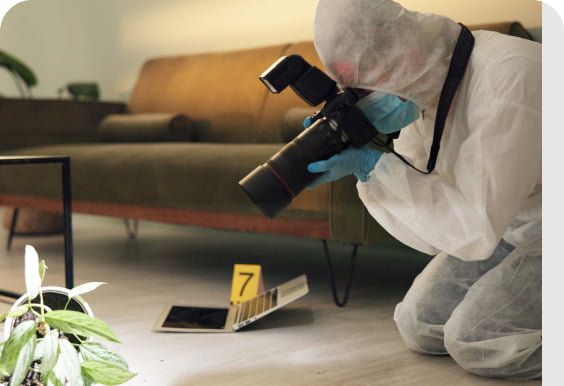
Crime scene investigators (also known as forensic investigators) work for law enforcement agencies. They collect evidence of many types, including fingerprints, at crime scenes and suspected crime scenes, such as fires where the crime of arson might be the cause. Their work is usually in the field.