Name the surfaces of the body where friction or papillary ridges are found.
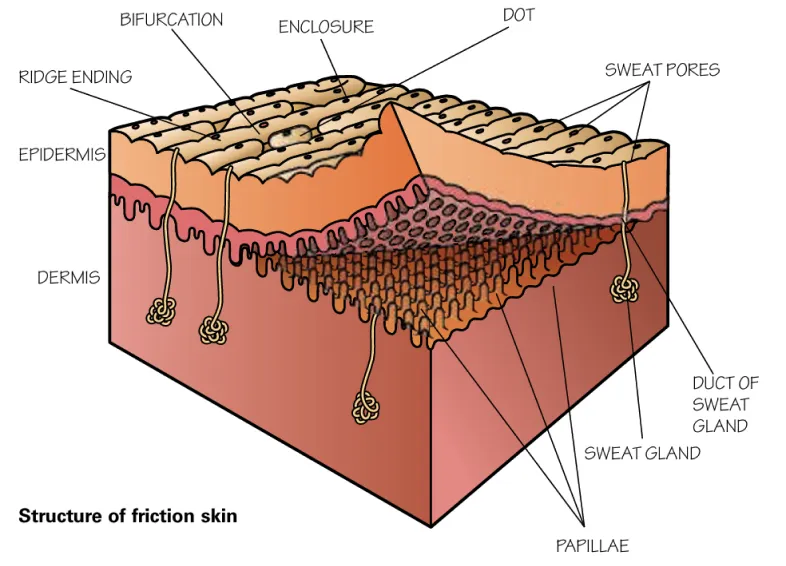
Structure of Friction in the Skin
The skin has three layers: epidermis, dermis, and (not shown in the illustration below) subcutaneous tissue. The epidermis, the outermost layer, is about as thick as a sheet of paper over most of the body. The dermis, the middle layer, is between 15 and 40 times as thick as the epidermis. The surface of the dermis has many tiny “pegs,” the papillae, that fit into pits on the underside of the epidermis. The papillae help fasten the dermis to the epidermis.
Friction ridges are technically known as papillary ridges. Scrapes, cuts, and other minor injuries do not change the ridge structure or the papillae; the original ridge pattern reappears in any new skin that grows.
Where Can Papillary Ridges Be Found on Your Body?
The friction skin found on the undersides of your fingers, palms, toes, and the soles of your feet is made up of raised patterns similar to the ridges on corrugated cardboard.
On your fingers and palms, these friction ridges help you grip and hold objects securely. On your toes and the soles of your feet, the same ridges provide traction, helping you maintain stability and prevent slipping on smooth or slippery surfaces.
Characteristics of Papillary Ridges
Now that you have identified the surfaces of the body where friction or papillary ridges are found,
let’s name the two basic principles that support the science of fingerprints.