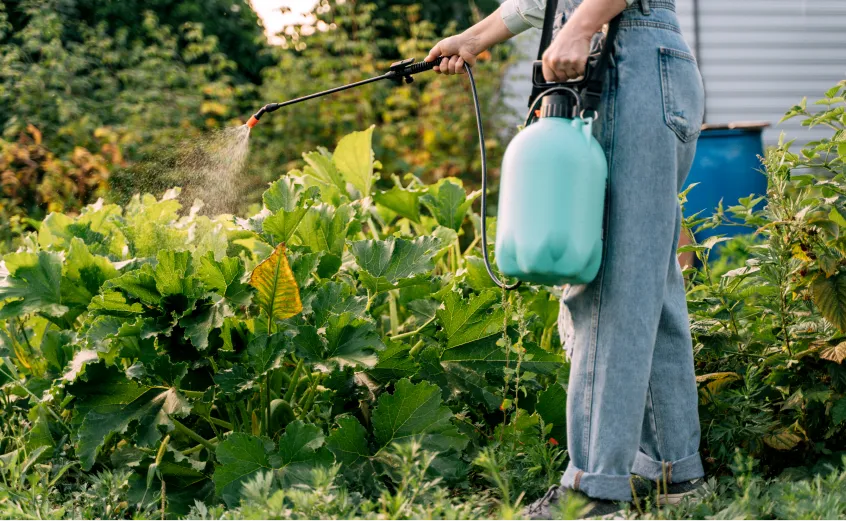
In an area (yard, park, golf course, farm, etc.) approved by your counselor, make a list of the pesticides, herbicides, and fertilizers used and how often they are applied. Identify the benefits of their use and the environmental impact, including effects on non-target species (including humans), what happens if the chemicals infiltrate into the groundwater, and what happens to any runoff of the chemicals.
Overview: Pesticides, Herbicides, and Fertilizer Use
When chemicals like pesticides, herbicides, and fertilizers are used in areas such as yards, parks, golf courses, or farms, they provide a range of benefits. These include helping plants grow, controlling pests, and improving crop yields. Fertilizers provide nutrients to the soil and plants. Pesticides and herbicides protect plants from insects, weeds, and diseases. Some of the pros and cons of their use are described in the table below.
Pesticides
Chemicals that farmers, homeowners, and others use to control pests, for example, insects. Some pesticides target a particular species. Others are toxic to many living things.
Herbicides
Chemicals that kill or control unwanted plants, like weeds. Herbicides help protect crops, gardens, and lawns. However, if they enter waterways, they can harm plants and animals.
Fertilizers
Substances added to soil or water to provide nutrients that help plants grow. The nutrients include nitrogen, phosphorus, and potassium. However, excess fertilizer can wash into rivers and lakes, causing overgrowth of algae and other water pollution.
Environmental Impact of Pesticides, Herbicides, and Fertilizer Use
Pesticides, herbicides, and fertilizers don’t affect only the pests they are meant to control. They can also harm other living things. Chemicals can seep into the groundwater, contaminating wells or drinking water, and may cause health problems or disrupt ecosystems. Runoff from rain or irrigation may carry these chemicals into lakes, rivers, or streams. This water pollution can affect fish and other aquatic life.
It is essential that risks are minimized by careful use and monitoring. Applying the correct amounts at the right time can reduce environmental damage while still benefiting crops or plants.
Pros and Cons of Pesticides
Studying Bald Eagles To Understand the Impact of Pollution
Did You Know:
A pesticide widely used in the 1950s and 1960s, called DDT, killed mosquitoes and crop pests but harmed beneficial insects and living things in the water. The chemical moved up the food chain, becoming more concentrated at each level, a process called biomagnification. In larger birds like brown pelicans, bald eagles, and peregrine falcons, DDT caused eggshells to become thin and fragile, leading to population declines. Public awareness grew after Rachel Carson’s book Silent Spring (1962), helping lead to the ban of most DDT use.
Resources
Resources
Find out more about the environmental impact of these chemicals, including effects on nontarget species such as humans and what happens when chemicals infiltrate groundwater.