

- All
- Aquatics
- Awards
- Biking
- Camp Staff
- Camping
- Conservation & Environment
- COPE/Climbing
- Cub Scouting
- Fishing
- National Jamboree
- National Outdoor Conference
- NCAP
- Outdoor Ethics/Leave No Trace
- Outdoor Programs - General
- Properties
- Range & Target Activities
- Safety
- Shooting Sports
- Special Needs
- Sponsored Content
- Wheels & Board Sports

NCAP
In Scouting America, the commitment to delivering safe and high-quality camping experiences is paramount. A critical component of this commitment is the annual completion of the Declaration of Readiness by each council. This process not only underscores the organization’s dedication to youth protection and program excellence but also ensures compliance with the National Camp Accreditation Program (NCAP) standards.
Understanding the Declaration of Readiness
The Declaration of Readiness is a formal statement by a council, confirming that all necessary preparations and documentation are in place for the safe and effective operation of its camps. Per NCAP Standard AO-802, this declaration must be submitted to the assigned Zone NCAP Assessment Team Leader no later than May 15 each year.
By signing this declaration, council leadership affirms that:
- All required governmental permits and approvals have been obtained or are pending with expected receipt before camp operations commence.
- Any noncompliance issues or deviations identified in the prior year’s camp assessment have been addressed in writing.
- A postcamp/precamp inspection has been completed, with any issues resolved to ensure compliance with national camp standards.
- All pertinent documents specified in the NCAP standards are provided digitally to the Zone NCAP Assessment Team Leader by the stipulated deadline.
The Importance of Completing the Declaration
- Youth Protection and Safety
Scouting America’s foremost priority is the safety and well-being of its youth members. The declaration process ensures that councils have implemented mandatory youth protection training, conducted criminal background checks, and established protocols to prevent one-on-one adult and youth interactions. These measures are vital in creating a secure environment for all participants.
- Compliance with National Standards
Adherence to the NCAP standards is non-negotiable for all councils. The Declaration of Readiness serves as a checkpoint, verifying that camps meet or exceed these standards. This compliance is essential for maintaining accreditation and demonstrating a commitment to continuous improvement.
- Operational Preparedness
Through the declaration, councils confirm that all operational aspects, from medical protocols to emergency procedures, are in place and have been reviewed for efficacy. This preparedness is crucial for delivering a seamless camping experience for youth members.
- Continuous Improvement
The declaration process encourages councils to reflect on past performance, address areas of noncompliance, and implement strategies for enhancement. This culture of continuous improvement ensures that camps evolve and adapt to meet emerging challenges and opportunities.
Consequences of Non-Compliance
Failure to complete the Declaration of Readiness can lead to significant repercussions, including the potential revocation of a camp’s authorization to operate. Such outcomes not only disrupt program delivery but also tarnish the council’s reputation and, more critically, compromise the safety and experience of youth participants.
The Declaration of Readiness is more than a procedural requirement; it is a testament to Scouting America’s unwavering commitment to safety, compliance, and program excellence. By completing this declaration, councils affirm their dedication to providing safe, transformative camping experiences that uphold the organization’s values and standards.
Aquatics
The announcement of the retirement of the Scouting America Lifeguard certification program, effective December 31, 2024, marks a significant shift in how Scouting America camps and councils approach lifeguard training. This change underscores the importance of proactive planning to ensure the continuation of high-quality lifeguard training and certification for summer camps and year-round aquatic programs.
Steps for Camps and Councils to Prepare:
To ensure a seamless transition, council and camp leadership should take the following steps:
Identify Your Training Plan Early
Begin establishing partnerships with organizations like the American Red Cross or YMCA. Both offer robust training programs and instructor certification pathways. If you do not have a current training agreement with the American Red Cross, reach out to the National Health & Safety Team for help.
Leverage the Transition Opportunity if Applicable
Scouting America has outlined a clear path for current Scouting America Lifeguard instructors to transition into nationally recognized training certifications. This pathway ensures existing expertise within camps is not lost. Individuals who are currently certified as lifeguard instructors through Scouting America can opt to “crossover” with American Red Cross crossover course. Details can be found here.
Educate Stakeholders
Share information about the transition with camp staff, volunteers, and parents. Communicate how the shift to nationally recognized lifeguard certifications enhances safety and aligns with Scouting America’s commitment to youth development.
Plan for Implementation
Plan now for additional time to get lifeguard instructors certified who can in turn certify your camp/council lifeguards. Ensure enough time for instructors to complete new certifications before the 2025 camping season.
National Camping School aquatics instructor training will no longer include lifeguard instructor training; however, most NCS courses will provide a pre-conference opportunity to become certified as a lifeguard instructor.
Attend Scouting America Lifeguard Transition Webinar
Taking place on January 16th at 7 pm CT, this webinar will help councils walk through the step by step process to be prepared to certify lifeguards moving forward. Register here.
Aquatic safety has always been a cornerstone of Scouting’s outdoor programs. While the Scouting America Lifeguard program’s legacy comes to an end, this transition ensures camps and councils can maintain—and even enhance—the quality of their aquatic programs. The National Aquatics Committee remains a committed partner to supporting councils and camps during this time of change.
For more information and resources, visit the Scouting America Lifeguard Instructor Transition page or contact the national outdoor programs and properties committee. Let’s work together to ensure a safe, successful 2025 and beyond.

Range & Target Activities
Exciting news in the development of Range and Target Activities program! An Atlatl program has been approved for the Scouts BSA, Venturing and Sea Scout programs. The Atlatl program can make a great addition to your council’s camping programs.
What is an Atlatl you ask? Atlatls have been utilized by humans for centuries for sport and survival. Today the atlatl and darts are thrown for competition all over the world. Atlatls are devices used to throw darts (6-8ft). These devices were developed throughout the world by such civilizations as the Aztecs, Aborigines of Australia and Indonesia, the Incas, Inuits and many more. The atlatl handle is usually about 15″ to 30″ long, and on one end has a hook designed to connect to the back of the dart, and the other end has some sort of hand hold.
This ancient throwing tool offers a unique blend of history, skill development, and hands-on engagement that aligns well with Scouting’s emphasis on learning by doing.
Atlatl introduces Scouts to a lesser-known range activity that emphasizes technique, focus, and safe instruction rather than speed or power. It also creates opportunities to connect program delivery with STEM concepts, history, and cultural learning.

Look for the full requirements for approved equipment, ranges, operating procedures, training and policies in the updated Range and Target Activities manual to start your adventure.
The program is only approved for Scouting America accredited camps and must meet all age-appropriate guidelines and supervision. As a reminder, if your council is looking to add this program, you must conduct a Program Hazard Analysis (PD-111) for a new program as well as have your council committees review (PD-112).
National Jamboree
Scouting’s biggest celebration is almost here, don’t miss your opportunity to join in. Day Visitor Tickets for the 2026 National Jamboree at the Summit Bechtel Reserve are now on sale!
Spend a full day exploring thrilling activities, live demonstrations, hands-on exhibits, and the incredible energy of more than 15,000 Scouts and Scouters gathered from across the nation. Bring your family, friends, or your unit and discover the excitement that makes the Jamboree a once-in-a-lifetime experience.
Day Visitor Dates & Hours
- Friday, July 24, 2026 – 10:00 AM–4:00 PM
- Saturday, July 25, 2026 – 10:00 AM–4:00 PM
- Monday, July 27, 2026 – 10:00 AM–4:00 PM
- Tuesday, July 28, 2026 – 10:00 AM–4:00 PM
- Wednesday, July 29, 2026 – 10:00 AM–4:00 PM
Ticket Prices
- Ages 14+: $100
- Ages 6–13: $75
- Ages 5 and under: Free
Coming Soon: Opening & Closing Show Tickets
Don’t miss the two signature events of the Jamboree:
- Opening Show — Thursday, July 23 at 8:30 PM
- Closing Show — Thursday, July 30 at 8:00 PM
These high-energy celebrations bring the entire Summit to life—stay tuned for ticket availability!
Purchase Tickets Here

Camping
During seasonal fall events, carving pumpkins at a Scouting event can be a fun and safe activity for youth. With the right tools and adult supervision this activity brings a unique activity that Scouts and families can do together. Here’s a guide on safe pumpkin carving, tools needed, and five design ideas. (You could even use this information to help fill out a Program Hazard Analysis before the event.)
But first lets highlight the newly updated Cub Scout program knife safety elective adventures!
Knife Safety
One of the highlights of the Cub Scout experience has been the Bear Claws Adventure and the Whittling Chip program where Cub Scouts are introduced to pocketknife safety. The updated Cub Scouting program now includes elective adventures centered around knife safety for Bears, Webelos and Arrow of Light! In the updated program, to use a knife in Cub Scouting, the Cub Scout must first complete the knife safety Adventure for their rank, even if they earned the knife safety adventure in a previous rank. This replaces the Whittling Chip and introduces continuous certification for the use of a knife.
Ok back to pumpkin carving…
Tools Needed:
- Pumpkin carving kit: These kits typically include a variety of tools such as small saws, scoops, and poking tools designed specifically for pumpkin carving.
- Markers or pens: For drawing the design onto the pumpkin before carving.
- Newspaper or a messy mat: To cover your work surface and make clean-up easier.
- Battery-operated LED candles or lights: To safely light up the carved pumpkin without using an open flame.
Safe Pumpkin Carving Tips:
- Qualified adult supervision: Ensure that younger Scouts (Cub Scouts) have active adult supervision throughout the carving process.
- Use appropriate tools: Avoid using sharp knives or tools not meant for pumpkin carving, as they can be dangerous. Camping or folding knives are not recommended. Scouts from Bear rank and up can utilize a knife. You could even incorporate the knife safety Cub Scout elective adventures into your weekend event program plan.
- Stabilize the pumpkin: Place the pumpkin on a flat, stable surface to prevent it from rolling while carving.
- Safety Circle: With the Safety Circle method, there’s almost no way you could accidentally cut anyone else, which is the essence of blade safety! Assign this program to an area that has enough space to safely accommodate the biggest group.
- Lighting: Use battery-operated LED lights instead of candles to avoid fire hazards.
- Scooping out the pumpkin: Use a pumpkin scoop or spoon to remove seeds and pulp, rather than hands or sharp objects.
Bonus point – Consider the ecological impacts when determining where to dispose of your pumpkins. Speaking of pumpkin disposal, as a reminder “Pumpkin Chunking” is not an approved activity in Scouting.
Design Ideas:
Here are a few pumpkin carving design ideas suitable for different age groups:
Classic Jack-o’-Lantern:
- Design: Traditional face with triangle eyes and a toothy smile.
- Difficulty: Easy for all age groups.
- Tips: Start with a simple design to get comfortable with carving.
Spooky Cat:
- Design: Carve out a silhouette of a cat with arched back and whiskers.
- Difficulty: Moderate.
- Tips: Use smaller carving tools for detailing the cat’s features.
Funny Monster:
- Design: Create a goofy, whimsical monster face with multiple eyes and a big grin.
- Difficulty: Moderate.
- Tips: Experiment with different facial features and expressions.
Camp Logos/Theme:
- Have camp logo or event theme templates that scouts can trace on a pumpkin.
- Difficulty: Moderate
- Tips: Have enough copies of the template to pass out for Scouts to use.
These designs can be adjusted based on the age and skill level of the youth participants. Encourage creativity and have fun with the carving process!
Resource Links:
Scouts Life article: https://scoutlife.org/about-scouts/cub-hub/58847/halloweenpumpkins/
Knife Safety Link: https://stg.scouting.org/program-updates/knife-safety/
Totin’ Chip Link: https://stg.scouting.org/awards/awards-central/totin-chip/
Safety Moment – Safe Scouting: https://stg.scouting.org/health-and-safety/safety-moments/safe-scouting/

Outdoor Programs - General
As we prepare for another fall season upcoming, we are proud to announce the next webinar series topics. Thank you for your feedback on topics that you would like to have us dig a bit deeper into along with your suggestions for new items. Our next series will begin in September and will be monthly through May 2027 (no December date).
Webinars will be on the Second Thursday of each month at 2 PM central time unless otherwise noted.
- September 10, 2026 – Camp Budget Management How to
- October 8, 2026 – Develop a Staff Alumni Association
- October 29, 2026 – 7 PM – What’s new in NCAP for 2027
- November 12, 2026 – Property Management and Maintenance Best Practices
- January 14, 2027 – Non-Merit Badge Programs at Camp
- February 11, 2027 – Trek Programs – a National High Adventure Base Take Over
- March 11, 2027 – 7 PM – Precamp leadership Meeting
- April 8, 2027 – Camp Commissioners and how to best use them
- May 13, 2027 – Short-term camp Best Practices
You can find more detailed information on the Outdoor programs webinar site at https://stg.scouting.org/outdoor-programs/opp-webinar-series/
Register HERE for the full series – one registration enrolls you in all.
Camping
It is no secret that the success of your summer camp hinges on the quality of your staff. Enthusiastic, skilled, and dedicated camp staff can turn a good program into an unforgettable experience for Scouts. But how can your council find the right candidates? Let’s talk about some strategies for effectively recruiting summer camp staff, highlight top job sites like Jobs.ScoutLife.org, and share tips for crafting compelling job postings.
1. Leverage Scout-Specific Job Boards
One of the best places to begin your search is within the community of those already passionate about Scouting. Scouting America maintains an excellent website for posting camp jobs at Jobs.ScoutLife.org. This site provides a platform where councils can connect with people who already know and appreciate the Scouting program. You can post jobs for your camp and see what jobs are available.
When posting on a Scout-specific job board make sure to:
- Be Descriptive: Clearly outline the position, responsibilities, and skills required.
- Highlight the Perks: Camp jobs offer more than pay-promote benefits like leadership development, outdoor skills training, and the chance to make a difference. Make sure to highlight these aspects.
- Post Early: Get ahead of the hiring season by posting positions in the fall or early winter to capture early applicants. Now is not too soon.
2. Expand Your Reach on General Job Sites
While Scout-specific platforms are optimal, you should also consider posting on general job boards, such as Indeed or ZipRecruiter, or seasonal work-centered venues like CoolWorks. These websites will help you find candidates both inside and outside of the Scouting world who are ready to have a life-changing summer adventure. Some of these sites may require subscription or charge fees but a little spending here can help you not be in crisis mode later.
3. Tap into Local Colleges and Universities
Tons of college students are looking for meaningful summer work that means more than just earning a paycheck.
Reach out to:
- Career Services: Ask to post on campus-sponsored job portals.
- Outdoor Programs: Reach out to departments focused on recreation, leadership, and education majors. Some schools even have an outdoor recreation major with students looking for internships.
- Student Organizations: Clubs such as outdoor adventure groups, leadership societies, or Scouting-related organizations can be an excellent fit.
4. Engage Your Alumni and Volunteers
Active and former Scouts, camp staff alumni, and council volunteers can be some of your top ambassadors.
Encourage them to:
- Share Openings: Ask them to share job postings with their networks.
- Recruit Friends: Incentivize them to refer qualified candidates.
- Join the Team: Many volunteers may be eager to step into a paid seasonal role.
5. Leverage Social Media
Platforms like Facebook, Instagram, and LinkedIn are potent tools for recruiting staff.
To maximize social media:
- Post Engaging Content: Share photos or videos of past camp staff in action. Use the staff themselves to help you create this content.
- Tag and Share: Tag local Scout groups, councils, or outdoor enthusiasts.
- Run Ads: Use targeted ads targeting people with interests in camp, outdoor, and leadership employment. These are marketing dollars well spent on your camp. This can help you more than investing in an out-of-date camp video.
6. Write Killer Job Postings
A great job posting can make all the difference. Here are a few tips:
- Use an Attention-Getting Title: Instead of ”Camp Counselor,” or “Summer camp staff” how about “Outdoor Adventure Leader” or ”Scout Skills Specialist.”
- Be Specific: Include duties, pay, location, and how to apply.
- Sell the Experience: Highlight what’s unique about the camp, such as waterfront activities, high adventure programs, or conservation projects.
- Call to Action: Invite candidates to apply and let them know why they won’t want to miss the opportunity.
7. Job Fairs and Events
Attend local job fairs, with an emphasis on seasonal or outdoor recreation-related events. Bring visuals -a banner, videos, testimonials of your staff- to help describe your unique camp culture.
8. Establish a Pipeline for Recruitment Year-Round
Year-round, stay in contact with returning and prospective staff through the following ways:
- Keep in Touch: Send newsletters or other information related to camp opportunities
- Off-Season Opportunities: Include prospective staff in council activities throughout the year.
- Building a Leadership Pathway: Design programs to develop the skills of older Scouts and young leaders with the potential for future staffing.
9. Start Early and Stay Focused
Recruiting summer camp staff is a year-round job that demands imagination and follow-through. Through utilizing online platforms such as Jobs.ScoutLife.org, tapping social media, and networking through local institutions, your council will recruit the team for a fantastic next camp season.
For more information, resources, or assistance, do not hesitate to reach out to the Outdoor Programs team at the outdoorprogram@scouting.org.
NCAP / Properties
When the National Camp Accreditation Program (NCAP) was introduced, a variety of changes to the Scouting America resident camping program took place. While the standards are focused on health and safety at camps, the program also added several new procedures designed to help councils evaluate the quality of their programs and facilities.
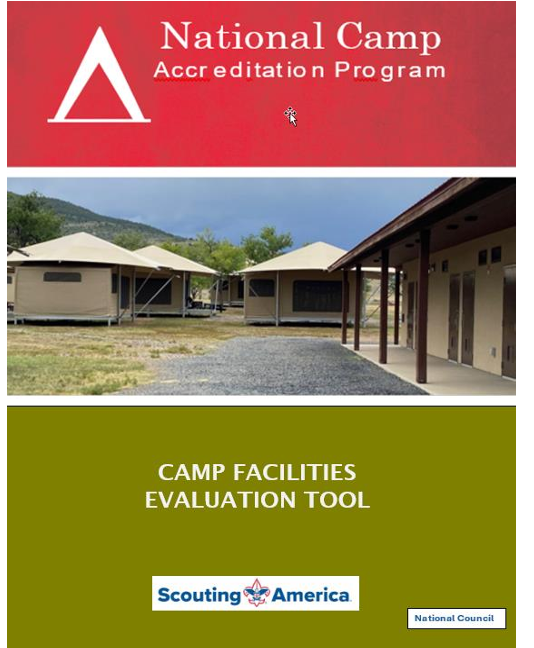
As part of the Authorization to Operate (ATO) application, submitted every 5 years, councils are required to submit the Council Facility Evaluation Tool (CFET)
https://stg.scouting.org/wp-content/uploads/2024/10/CFET-Manual-2025-V4.2.pdf
While it is only required every 5 years, it is recommended that the document be updated every year. The council team that prepares the CFET should focus on the quality of the building at camp – – Do they do a good job of representing the Scouting brand? Do they make a good first impression? Are they in good shape & can they handle the load of the summer program? Try to look at your facilities through the eyes of a first-time Scout & their parents. What do they see & does it make them want to come back?
Pictures are a key part of the CFET. Take lots of them and be sure to focus on the good features, as well as those facilities that need repair or replacement. Photos create a record of the condition of the facilities and if updated annually, they can help the council track wear and tear and can be useful in guiding the strategic plan for the camp(s) and the council.
Another part of the camp evaluation process is the pre or post camp inspection. It is required in the standards. This document can be used to create a checklist of items that require attention prior to opening camp for the next season. It is also a great time to update the CFET photos.
The purpose of NCAP is to help councils evaluate and elevate their camps to new levels of excellence if the quality of their programs and facilities. The CFET and the pre/post camp inspection are key pieces of the goal to reach that level of excellence.
Dan Gille
Strategic Analysis and Properties Committee
Safety
Scouting America places the highest priority on the safety and well-being of its youth members, volunteers, and staff. To uphold this commitment, the use of fireworks and pyrotechnics is strictly prohibited during any Scouting activity. This clear directive is outlined in the Guide to Safe Scouting, the official safety resource for all Scouting programs. According to the online edition of the guide, “Fireworks and other pyrotechnic devices are prohibited in connection with programs and activities”.
This prohibition applies universally across all Scouting settings, including council camps, unit campouts, community events, and family Scouting activities. Fireworks, even when used under adult supervision, present significant safety hazards such as burns, accidental fires, hearing loss, and serious injuries. By eliminating these risks, Scouting America ensures that all activities remain focused on age-appropriate, controlled, and educational experiences that promote learning and fun in a safe environment.
Beyond personal safety, the ban on fireworks supports Scouting America’s strong commitment to environmental stewardship. Fireworks can ignite wildfires, especially in dry or forested areas where many camps are located. Additionally, the debris and chemical residue from fireworks pollute natural spaces, contradicting the principles of conservation and Leave No Trace that are central to the Scouting philosophy. The policy helps protect ecosystems while teaching Scouts to act as responsible caretakers of the land.
To help maintain the celebratory spirit of certain events without endangering participants or the environment, Scouting leaders are encouraged to find creative alternatives to fireworks. Light shows using flashlights, glow sticks, or LED displays, as well as engaging campfire programs with songs, skits, and storytelling, can create memorable experiences that are both entertaining and safe. These alternatives promote teamwork and imagination—hallmarks of the Scouting experience—while adhering to established safety guidelines.
Ultimately, Scouting America’s prohibition on fireworks and pyrotechnics reinforces the organization’s core values of safety, responsibility, and environmental respect. Adherence to this policy, as outlined in the Guide to Safe Scouting, is essential to maintaining a secure environment where youth can thrive and grow. Leaders, parents, and Scouts alike share in the responsibility of upholding these standards, ensuring that Scouting remains a trusted and enriching program for all.
Fishing
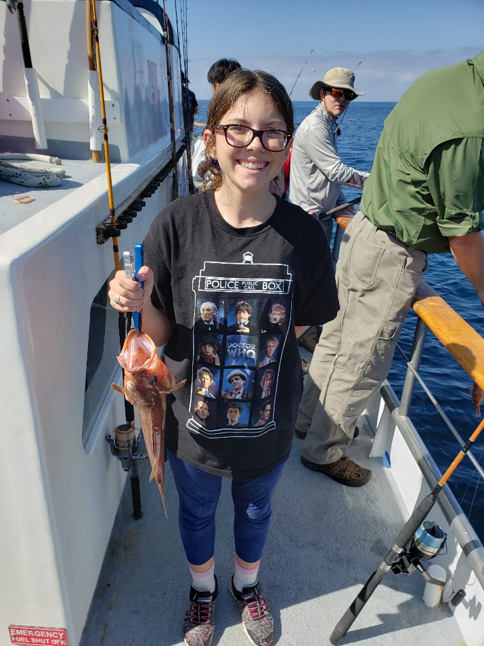
Where is the best place to spend your program dollars? For Scouting Executives and Volunteers, this must be the million-dollar question.
What is the purpose of spending these precious dollars? The Wildlife Conservation Profession has a initiative called R3. The three R’s stand for Recruitment, Retention and Re engagement. If you don’t know this, virtually all wildlife conservation dollars are raised by the sales a licenses and related equipment. All guns, ammunition and fishing related gear has a tax on it for funding conservation. The State Agencies whose job is conservation know this and have initiatives to recruit sportsmen and women to fish and hunt.
We in Scouting should see R3 in our ranks also. We should be thinking R3 for both Youth and Adult Volunteers.
Boy’s life magazine did a survey. They asked Cub Scouts and Boy Scouts what activities they expected to do after 3 months after their registration. Their answer at the top was Camping and hiking. The Cub Scouts had fishing as #5 and the Boy Scouts had fishing as #3. Surprisingly, these were both above shooting.
So, to have satisfied customers, you need to meet their expectations. Do we inherently make a promise to the youth by their expectations and don’t meet them? How about looking at fishing as your hook? (Pardon the pun, I just couldn’t help myself)
Here is one way to start. Consider having a Certified Angling Instructor Class (CAI) in your council. This class will give you more knowledgeable and enthusiastic Volunteers. Your Fishing, Fly Fishing and Wildlife Conservation Merit Badge Counselors are your target market for this class.
From the CAI class, see if you can start a Council Fishing Committee. You will need a leader who has the management skills to run a committee. This Committee runs fishing events in your council.
It is really that easy.
If you want more Youth, look at fishing. It is the best bargain in Scouting!
Fishing
Few outdoor activities connect with Scouts as naturally and universally as fishing.
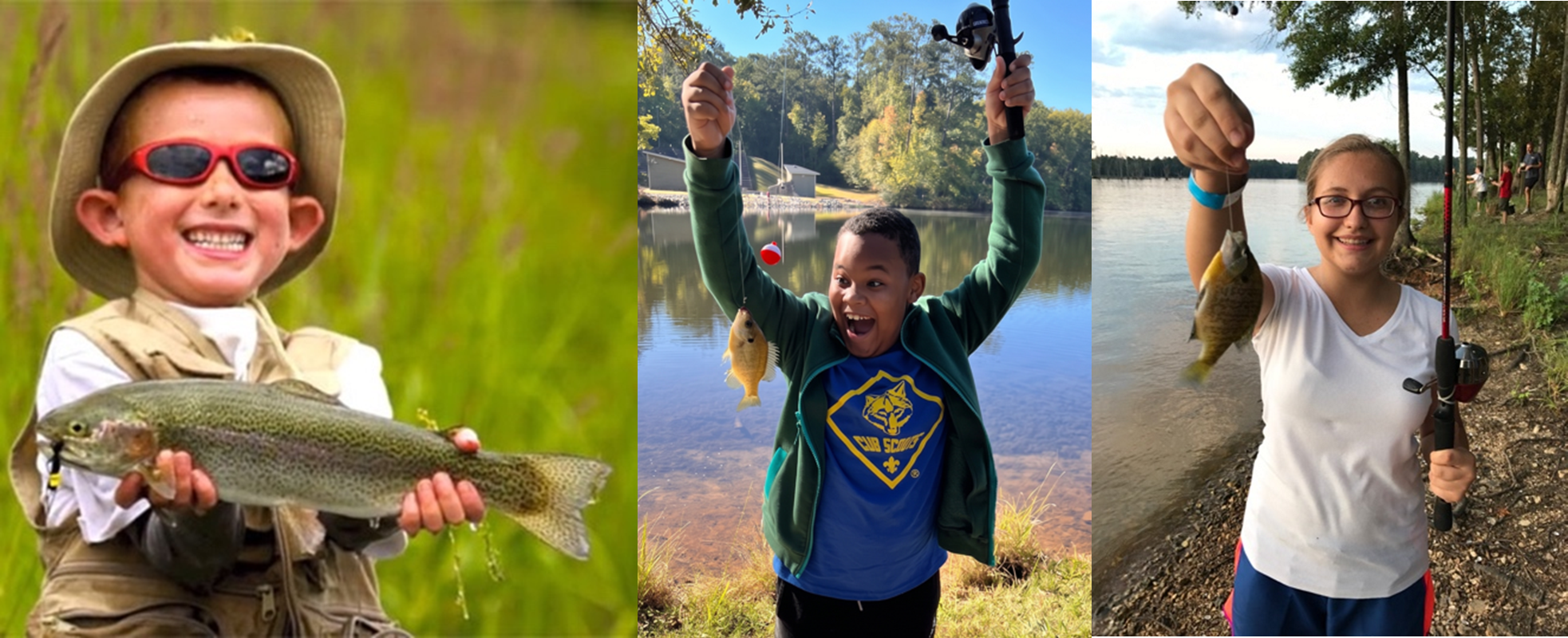
A Cub Scout grips the fishing rod tightly as the bobber disappears beneath the surface. A parent kneels beside them, coaching their Cub while excitement builds. Moments later, a bluegill breaks the surface of the water, and suddenly the shoreline erupts in cheers, laughter, and a smile that may last a lifetime.
In councils across the country, leaders see this same moment play out every year. For many youth, that first fish becomes more than just a fun outdoor activity — it becomes a moment of confidence, connection, and discovery that deepens their relationship with Scouting and the outdoors.
Fishing creates excitement for youth, strengthens outdoor programs, supports recruitment and retention, and helps families build lasting memories together. Fishing is also one of the rare outdoor activities that engages every age group within Scouting, bringing together youth, parents, leaders, and grandparents while creating opportunities for mentorship, confidence-building, and conservation education.
Across the country, councils are increasingly using fishing as a tool to strengthen Recruitment, Retention, and Reactivation (R3). Fishing events are easy for new families to participate in, highly visible in local communities, and adaptable to nearly every council’s outdoor program.
Fishing in Cub Scouts
Cub Scouts love to fish, but many parents and unit leaders may not know how to safely teach fishing skills or organize successful fishing events.
Scouting America offers Fishing Basics training, designed primarily for pack leaders, Cub Scouts, and their parents, while also supporting Scouts BSA leaders and volunteers. A Certified Angling Instructor (CAI) or Angling Educator (AE) teaches the Fishing Basics course.
Fishing is now integrated into Cub Scout Adventures at every Cub Scout level, making it an increasingly important part of pack outdoor programming. Fishing activities work especially well at:
- Pack campouts
- Day camps
- District events
- Council outdoor weekends
- Public recruiting events at community ponds, lakes, parks, churches, and schools
When conducted in visible public locations, fishing events can also become highly effective recruiting opportunities for new families.
Councils looking to strengthen their Cub Scout fishing programs should seek out Certified Angling Instructors (CAIs) and Angling Educators (AEs) who can assist with training, program development, and event support.
Additional Cub Scout fishing resources include:
Fishing in Scouts BSA
As Scouts grow older, many want to deepen their fishing knowledge and expand their skills.
Fishing education within Scouts BSA centers around three key merit badges:
- Fishing
- Fly Fishing
- Fish and Wildlife Management
Scouts who complete all three merit badges and complete additional fishing-related service or leadership activities may earn the Complete Angler Award.
For many Scouts BSA members, summer camp or council fishing events become their first exposure to advanced fishing techniques, conservation practices, and structured outdoor instruction. Fishing opportunities are also available at all four national high adventure bases.
Strong fishing programs strengthen troop and council outdoor programming by increasing youth engagement, supporting advancement, expanding outdoor skills, and encouraging conservation stewardship throughout the year.
Building a Strong Council Fishing Program
Councils looking to expand their outdoor program offerings should consider forming a dedicated Council Fishing Committee.
As of this writing, more than 30 Council Fishing Committees are active nationwide, with additional committees currently in development.
A successful council fishing program functions much like a three-legged stool:
- It trains fishing instructors and program leaders
Councils need qualified volunteers who can confidently teach fishing skills and support unit leaders. - It provides age-appropriate fishing equipment
Accessible gear helpseliminate barriers for youth and new families. - It develops access to productive fishing locations
Especially for Cub Scouts, early success matters. Young Scouts who are not catching fish quickly often become frustrated, lose interest, and may never fish again. Successful councils work toidentify and maintain lakes and ponds with healthy fish populations where youth have a strong chance of catching a fish within a short period of time.
The seat of the stool is the council’s outdoor program itself — recruiting events, Cub-O-rees, camporees, summer camp programs, training courses, and year-round fishing opportunities that bring all three elements together. In councils with established Council Fishing Committees, those committees often help lead and coordinate this work.
Fishing programs can be scaled to fit nearly any council size or budget. Even modest programs can create meaningful impact when built around trained leadership and accessible local opportunities.
Councils interested in learning more about establishing a Council Fishing Committee should watch for upcoming “How to Create A Council Fishing Committee” webinars scheduled for September 22 and September 24, 2026.
For questions about creating a Council Fishing Committee, email:
Bill Kalbas — mccfishing415@gmail.com
The National Fishing Leadership Team
The Scouting America National Fishing Leadership Team (NFLT) is composed of trained volunteer subject matter experts who support fishing education and program development across Scouting America.
The NFLT oversees four levels of fishing instruction:
- Fishing Basics – Teaches pack leaders and parents how to take youth fishing.
- Angling Educator (AE) – How to teach fishing and run events at a council level. How to teach Fishing Basics.
- Certified Angling Instructor (CAI) – How to plan, run, and lead fishing programs at councils, camps, and national events. How to teach Angling Educator.
- Fishing Course Director (FCD) – How to plan and teach all of these courses.
Since 2005, the NFLT and its Fishing Course Directors have trained nearly 5,000 Scouters to serve as fishing instructors at the unit, district, and council levels. More than 2,500 of those leaders — over half of all trained to date — have been trained since January 2024.
The NFLT also serves as a subject matter expert resource supporting Cub Scout, Scouts BSA, and Venturing fishing advancement, program updates, leadership support, training curriculum development, and fishing resource development. In addition, the NFLT helps train staff and provide special-event support at national high adventure bases and major Scouting events.
NFLT volunteers and CAIs nationwide have organized and operated fishing programs at National Jamborees, NOAC, VenturingFest, and Scouting America’s national high adventure bases.
The team’s focus remains simple: help more youth successfully learn to fish, enjoy the outdoors, and strengthen their connection to Scouting through meaningful outdoor experiences.
Fishing Resources for Councils and Leaders
Scouting America fishing resources are available online at:
For questions on Scout fishing resources and training, email: fishing.scoutingamerica@gmail.com.
At its core, fishing in Scouting is not just about catching fish.
It is about creating confidence, mentorship, outdoor connection, conservation awareness, family participation, and lifelong memories.
Every new Cub and Scout who learns to fish gains more than a skill — they gain confidence, patience, outdoor awareness, and a connection to Scouting that can last a lifetime.
“We measure our success in smiles.”

Fishing
The fishing equipment is flying off the shelves or not there at all. With the societal changes that 2020 has brought us, the new hot outdoor activity is fishing. Fishing license sales are at a record high. It is a fun activity where you can easily social distance.
So, what have you been doing? Jig-Saw puzzles? Watching way too much TV? Is your dog looking at you saying do I have to go for a walk again? You can easily fish and enjoy the great outdoors safely.
What about your Pack, Troop or Crew? Can you find a better way for them to get outside? Fishing is also a great family activity and a good way to engage families into your unit’s program.
Some of the activities developed by the National Fishing Sub Committee during quarantine and seclusion are:
- A new Instructional Cub Scout Fishing video: “Worm Drowning 101”, a presentation on how to simply take Cub Scouts fishing. Currently in editing
- Fishing Merit Badge online: a resource for Fishing Merit Badge Counselors to present Fishing Merit Badge virtually. Proposed deadline is August 1, 2020
- Certified Angling Instructor (CAI) Course online: we are nearly finished with the CAI course to be offered via distance learning. It should be completed in mid August 2020.
- Developing Fishing activities for all levels of Cub Scouts: currently, fishing is only offered for Cub Scout Bears. Watch the website for release in the near future.
To take your youth and Scouting family fishing really doesn’t take much. Getting outdoors and doing a fun activity is what our youth are after! It’s not the size of the fish; it’s the thrill to be outdoors. So, offer them a chance to catch something that “wiggles the rod” and put a big smile on their face by being part of the Adventure of Scouting!
Email blast!
Email blast!