

- All
- Aquatics
- Awards
- Biking
- Camp Staff
- Camping
- Conservation & Environment
- COPE/Climbing
- Cub Scouting
- Fishing
- National Jamboree
- National Outdoor Conference
- NCAP
- Outdoor Ethics/Leave No Trace
- Outdoor Programs - General
- Properties
- Range & Target Activities
- Safety
- Shooting Sports
- Special Needs
- Sponsored Content
- Wheels & Board Sports
Cub Scouting / Fishing
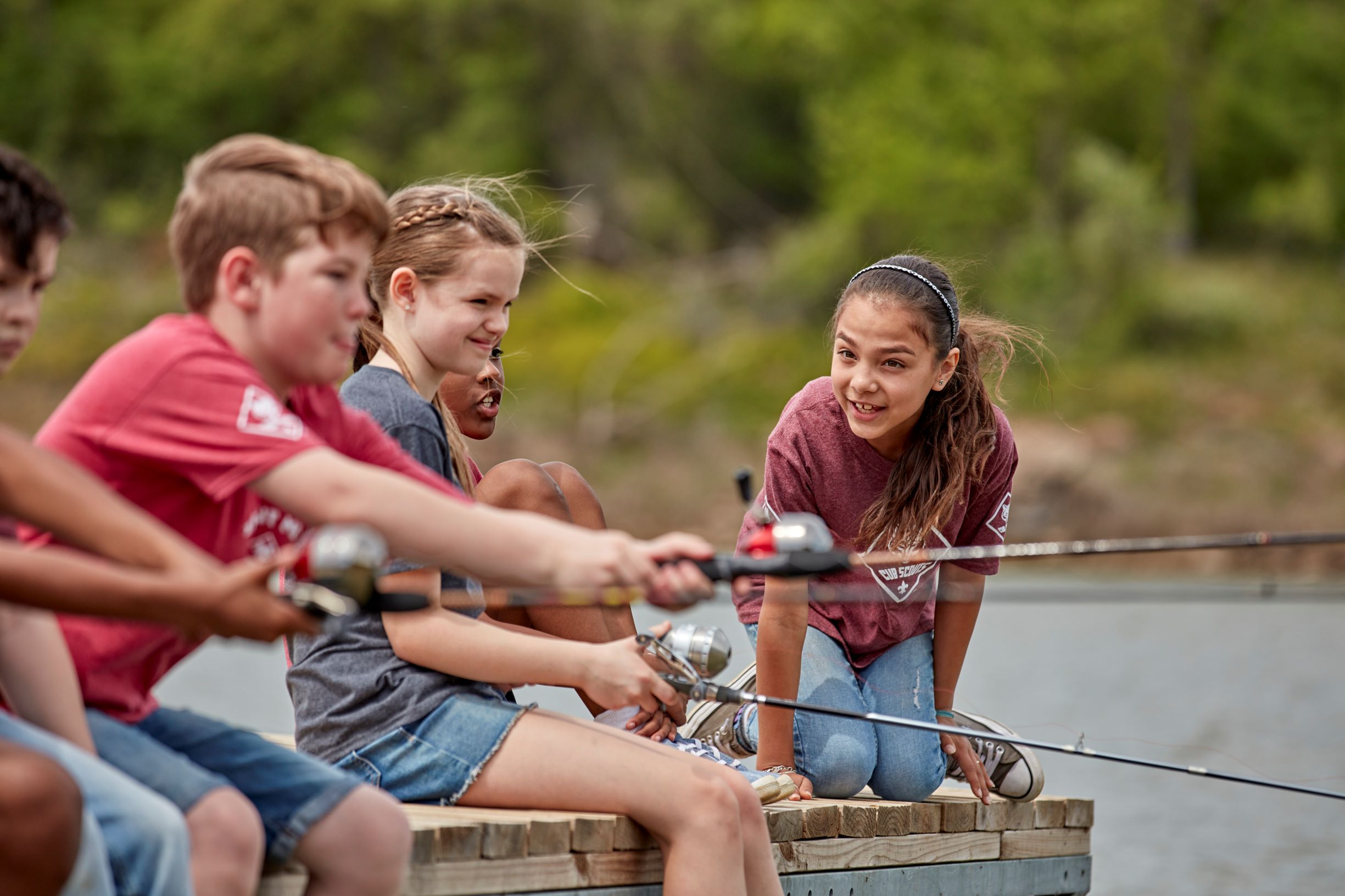
The Cub Scout fishing adventures introduce Scouts of all ages to the fun, challenge, and rewards of fishing, with activities that grow in complexity as Scouts advance through the ranks. These new adventures—Go Fish for Lions, Fish On for Tigers, A Wolf Goes Fishing, A Bear Goes Fishing, Catch the Big One for Webelos, and simply Fishing for Arrow of Light—are designed to create a progression of outdoor skills while emphasizing safety, stewardship, and fun. By participating in these age-appropriate adventures, Cub Scouts not only learn how to fish, but also how to enjoy the outdoors responsibly and confidently. More details about each adventure can be found at stg.scouting.org/programs/cub-scouts/adventures.
For Lion Scouts, the Go Fish adventure provides a gentle and fun introduction to fishing. Lions explore what fish are, where they live, and why people fish, all through playful, hands-on activities. They practice simple skills like casting on dry land and identifying different types of fish, all while learning how to stay safe near water. The value of Go Fish is giving young Scouts the chance to try something new in a safe, supportive environment, while sparking curiosity about the natural world and sharing the experience with their adult partners.
The Fish On adventure invites Tiger Scouts to get even more involved with fishing by taking a closer look at how fish live and what they eat. Tigers begin learning the basics of fishing equipment, bait, and simple techniques, and they practice casting with the possibility of catching their very first fish. This adventure helps Tigers gain confidence as they begin using real fishing gear while reinforcing the importance of safety, patience, and teamwork. The value of Fish On is helping Tigers feel successful in their first fishing attempts while fostering a love for outdoor activity.
With the A Wolf Goes Fishing adventure, Wolf Scouts take their fishing skills further by exploring fish habitats, learning how to choose a good fishing location, and understanding the importance of protecting water environments. Wolves begin thinking beyond just catching fish, learning how their actions impact nature and how to care for the areas where they fish. The value of A Wolf Goes Fishing is teaching environmental stewardship while improving fishing abilities, helping Wolves connect fun outdoor experiences with responsibility to the planet.
In the A Bear Goes Fishing adventure, Bear Scouts build on their existing skills with more advanced tasks. They learn how to assemble fishing gear, tie basic fishing knots, and select the right bait for the fish they want to catch. Bears take more ownership of their fishing experience by handling equipment carefully and demonstrating good sportsmanship. The value of A Bear Goes Fishing is in helping Scouts develop independence and competence, giving them the confidence to participate in fishing outings with minimal assistance.
The Catch the Big One adventure challenges Webelos Scouts to take charge of planning and executing a fishing experience. Webelos learn how to read local fishing regulations, prepare their gear, and understand how weather and seasonal changes affect fishing. They also explore different fishing techniques and may help organize a fishing activity for their den. The value of Catch the Big One is preparing Webelos for leadership roles, teaching them how to plan, guide, and support outdoor activities while deepening their fishing knowledge.
For Arrow of Light Scouts, the Fishing adventure is the culmination of their Cub Scout fishing journey. In this adventure, Arrow of Light Scouts refine all the skills they have developed, demonstrate leadership by helping younger Scouts, and explore ethical fishing practices and conservation. They are encouraged to share their knowledge, model safety and respect, and lead by example during fishing outings. The value of the Fishing adventure is preparing these older Scouts to mentor others while reinforcing a lifelong respect for nature and outdoor skills.
Taken together, these six fishing adventures create a complete and enriching experience for Cub Scouts from kindergarten through fifth grade. Each adventure builds on the previous year, allowing Scouts to progress from basic introductions to mastery and leadership. Along the way, they develop not only practical fishing skills, but also important life skills like patience, responsibility, planning, and environmental stewardship.
Fishing in Cub Scouts is about much more than just catching fish. It’s about spending time outdoors, working together, respecting nature, and creating lasting memories with friends and family. Thanks to the new Cub Scout fishing adventures, Scouts at every level can safely explore the joys of fishing, grow their confidence, and gain skills they’ll carry with them throughout their Scouting journey and beyond.

Outdoor Programs - General
The American Camp Association (ACA) unites thousands of camps of all types into a potent catalyst for improvement in the areas of local networking, camp programming, staff training, research, and public policy. Read on to see how you can grow with these tools.
The First Year’s Membership is FREE
ACA offers a free one-year membership for first-time individual members, making it easy to try with zero cost.
How to get it:
- Go to the ACA Join page: https://www.acacamps.org/membership
- Create an account and select “Join”
- Enter promo code ACAFree
- Your total drops to $0 at checkout
You can also extend this offer to frontline camp staff and key volunteers, giving your entire team access to professional resources at no cost.
Ready-to-Use Training and Staff Resources
ACA membership gives you immediate access to practical tools you can use right away:
- Online courses and webinars
- Staff training content
- Quality research and national trends
- Job posting portal and recruitment tools
For Scout camps, this means another resource for staff week training ideas, national insights, and supplemental materials without having to build everything from scratch.
Improve Safety and Program Quality
Like Scouting, ACA is a national leader in camp standards and best practices. In addition to NCAP (not instead), ACA offers their own path to accreditation to help camps improve. Their framework helps camps strengthen:
- Health and safety procedures
- Emergency preparedness
- Program consistency
Using ACA resources helps ensure your camp is aligned with nationally recognized expectations and take a different look at your operations.
Nationwide Network of Camp Professionals
ACA connects you with more than 10,000 professionals and thousands of camps.
That network gives you:
- Access to an annual National Conference
- Solutions to common challenges
- Peer support when issues arise
Instead of reinventing the wheel, you can learn from what already works across the country.
Local Connections and Partnerships
22 Local ACA branches are where you can:
- Learn more about common issues for camps in your region
- Meet colleagues from non-Scouting camps to share local wisdom for vendors, staffing sources, and more
- Join nearby continuing education events that addresses common challenges
It’s a simple way to show that your Scout camp is part of a larger professional community focused on excellence.
Bottom Line
ACA offers Scout camping professionals a no-cost entry point, practical tools, and a strong professional network. After your first year, you should see how this organization can build a deeper network, more efficient operations and stronger programs, and how your expertise can be shared in the larger camping community.
Conservation & Environment
This will be a continuing series of articles on various aspects of the properties we own, lease, care for, and look to make better. As we all know, the program of Scouting is valuable to the growth of youth in this country and around the world. Where we deliver that program needs to convey that value and the coming articles are intended to assist us all in making that conveyance to our current users, as well as all of our future users and their families.
For most of us we use on a daily basis an item we take for granted being available for us to purchase 24/7 all year long. Until we couldn’t. What? Think back to the early days of Covid-19. What disappeared off grocery shelves faster than anyone thought possible? And many of us thought, why are people buying this one product over anything else?! I mean really!!! Toilet paper. Who would’ve thunkit?
We all expect toilet paper to be ever present in our stores, until it isn’t, and wasn’t! And why did this occur? It’s not like we lost the source. Where does toilet paper originate? If you’re a Charmin user you may think a little cabin in the woods with a bear population that happily makes toilet paper for us to use, but… that’s crazy thinking! Or is it?
So, this month’s article is not about toilet paper, I’m sure you’re happy to know. Its not about the bears either. It is about the ‘woods’ this material comes from.
We are blessed with some of the most awesome ‘dirt’ on this satellite we ride on! And on that ‘dirt’ for most of us, we have an abundance of trees. Of all shapes, sizes, and species. And, quite frankly, some of us manage our forests better than others. We should all have forestry plans in our quiver of tools to use in managing the properties we own of course, but also for those we lease, which many of us would find surprising in the high percentage of properties we operate our program upon, that we do.
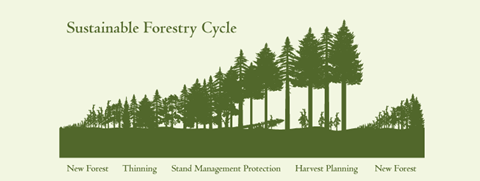
In particular a component of that forestry plan needs to address how we harvest the God given resource available to us. Depending on your acreage of trees, what quantity could be harvested regularly? To some degree, this is a market driven resource, but given the growth of many parts of the country, the need to harvest some of our forests is always present. In addition to how you manage the harvesting, notably contract inclusions addressing access roads installed to remove those trees harvested from an area, what materials are used and how are they maintained over time, what happens to the slash created from the harvesting process, and how is the acreage harvested replanted for a future crop. All of these questions, and more, need to be addressed with a logger prior to any harvest being initiated.
What we’ll address this month is the last part of those inclusions just mentioned, replanting. In review of several forestry plans for those that have one, this issue is rarely addressed, but should be so future harvests, and their revenue, are managed in perpetuity. Additionally, as forests are sometimes referred to as the “lungs of the world” we all should manage the health of our “lungs” more directly as they take care of our atmosphere, or more directly, the air we all breath. Given that climate change is very real and is happening right before our very eyes, this is a serious subject becoming all the more so with each passing day. We cannot afford to look the other way any longer!
What would you say if the question was posed to you concerning the rate of what we’re losing in forested areas every year? Are you aware of the loss? From the Arbor Day Foundation the amount of deforestation of the worlds rain forests alone is “roughly 81,000 square miles each year.” Of those who’ve been to our crown jewel, Philmont, we know the ranch is comprised of roughly 300 square miles. The amount of rain forest alone each year we’re losing is equivalent to about 270 Philmont’s!
Think about that for a minute. Notably, think about the fire this organization experienced at Philmont a couple years back. That was what? Figure heard most was about 33,000 acres were burned. That equates to about 52 square miles. To put this in another perspective, the amount of rain forest alone we lose every year is equal to 1558 Philmont burns every year! Think about that! And that doesn’t include the fires in California, in Canada, Indonesia, Russia, Europe, or Africa! We are losing this precious resource at an extremely alarming rate!
So, what can we do about it?
First, let’s all start by generating a forestry plan for the properties you manage if you haven’t already. And if you need guidance on what to include don’t be shy about reaching out and asking for the help! Working with a local forester and/or a representative of the US Forest Service would be a good first step. Consulting with loggers who are more conscious about what their operation does to a tract of land than those who are blind to the damage these companies can cause is a good second step.
Second, as part of the replanting component, where can you go to acquire seedlings? Where can you acquire very young trees, in a cross-section of species that will grow in your area and soil types? In a quantity that will translate to a good survival percentage of the area replanted. As a tree doesn’t become the 40’ to 80’ beauty they will grow to overnight, what is the expected survival rate and what thinning measures if any, need to take place while the forest matures? This is where having your local forester as a member of the team that helps you manage your property is invaluable. Your Ranger for your property needs to be versed in more than just how to take down a diseased tree safely, but also how they can contribute to the success of a harvested area being replanted and grow into a future area to be harvested.
Sources for tree seedlings include your county extension service. Many of the states, especially those that are heavily forested, have state and county departments that offer varying species of trees. Many offer fast growing species to the agricultural community to help protect fields and act as wind breaks to minimize wind erosion. Others offer the species most commonly harvested for the lumber and pulp industries. Other sources include the lumber industry and mills as they rely on a continuous supply of product to generate what they sell to other industries. Arbor Day Foundation can supply varying species of trees. Nice thing to know is they are capable of supplying large quantities of seedlings to cover acres. Some cities, especially those designated as Tree Cities, have tree farms which may offer seedlings in trade for time helping on the tree farm itself. Toilet paper was mentioned back in the beginning of this edition of Let’s Do It! with some of those manufacturers implementing their own tree planting initiatives so they have a steady supply of pulp from which to generate their product lines. Quilted Northern is a brand that replaces 2 trees for every tree they harvest. In fact, since 2020 they’ve already funded the planting more than 3.5 million trees. Now we’re not on that scale, but at this point every little bit helps.
Looking on the internet other sources for seedlings are – Walmart, Etsy, Gurney’s, many nursery’s are good sources for obtaining quantities of tree seedlings. Bestseeds, Willis Orchards, Stark Brothers, and certainly Amazon are among many who offer seedlings. So, it’s not like you can’t obtain these locally and by wholesalers throughout the country. The only caution is to obtain seedlings of species more native to your area and soils.
Another option may be 8billion trees. This is a company that was formed to offset the deforestation taking place in the Amazon rain forest in particular. While they don’t distribute seedlings, by purchasing their products, making donations, and membership you are contributing to the carbon offset initiative which is vital to the health of our planet.
Trees. Large and small, big and tall, colorful and fruitful, trees are a common sight on our properties. And while they can be majestic and provide us numerous resource they can also present us with all sorts of issues we need to be much more aware of. But, let’s get to where we manage better what we have already first. Then we can dive deeper into all approaches to managing the trees on your properties.
Generate the plan and put the plan in motion so future generations of Scouts and their families, and quite frankly, their communities can enjoy the woods as much as we do!
See you next issue!
Dave Cornell
Architect
The Outdoor Programs / Properties Team is ready to assist and guide in any respect to making the program of Scouting the best youth program! Reach out to any member of the team and we’ll endeavor to provide quality answers to any issue you may have and/or facing. We look forward to working together to make the program the best ever!

Sponsored Content
In 2011, two dedicated volunteers at the Simon Kenton Council noticed a significant gap in their existing software: it simply wasn’t providing the data and facility rental management capabilities they needed. With backgrounds in technology, they knew they could do better. What started as a focused effort to support their own Council quickly blossomed into a powerful realization: this solution could benefit many Councils. And just like that, Black Pug Software was born.
Why “Black Pug”? A Story of Tenacity
The name “Black Pug Software” isn’t random; it’s a nod to the founders’ beloved family pets. Pugs, though small, are renowned for their tenacious spirit, fearlessly taking on challenges no matter the size. This became a fitting metaphor for the new company, ready to enter a market dominated by larger, established players. Like their canine muses, Black Pug Software was determined to prove that a smaller, agile team could make a significant impact.
Growing with Scouting America, Globally
Since its beginnings in 2011, Black Pug Software has expanded its reach from a few Councils to supporting Scouting America Councils worldwide. Despite this growth, their commitment remains unwavering: to exclusively serve Scouting America. Their products are meticulously crafted to meet the diverse needs of Councils of all sizes, with a continuous stream of innovative features designed to enhance the Scouting experience.
Tailored Solutions for Every Council Need
Black Pug Software offers a comprehensive suite of products designed to streamline operations and enhance efficiency for Councils:
- Camp Reservation System: This system simplifies weekend camping, allowing Units and external groups to reserve everything from individual campsites to entire camps or specific ranges.
- Scouting Event System: From training sessions and fundraisers to summer camps and day camps, this system expertly manages a wide array of activities.
- Trading Post System: Councils can effortlessly sell products online, offering both shipping and in-store pickup options for customers.
- Point of Sale (POS) System: Designed to replace existing Council POS systems, this robust solution handles registrations, customer payments, and inventory sales with ease.
Innovation at the Heart of Our Software
Beyond these core systems, Black Pug Software is continually developing innovative solutions that directly address the unique challenges faced by Scouting America Councils. We understand the importance of seamless integration and data accuracy, which is why we’ve developed features like:
- PeopleSoft Upload Option: This critical feature streamlines the transfer of financial and other essential data directly into your Council’s PeopleSoft system, reducing manual entry errors and saving valuable time.
- Automatic Member Validation: Our system goes beyond simple registration by automatically validating members. This includes confirming the membership status of your own Council members attending local events, as well as seamlessly validating out-of-council members whose home Councils have uploaded their
membership data. This ensures accurate participant lists and proper compliance for all events. - Advanced Inventory Tracking: Go beyond basic sales with our sophisticated inventory tracking capabilities. Councils can monitor stock levels in real-time, manage multiple locations, and gain insights into popular items, optimizing purchasing and reducing waste.
- Scoutbook Merit Badge Data Import: This innovative feature allows for the seamless import of merit badge data directly into Scoutbook, simplifying record-keeping for summer camps and other programs. This eliminates duplicate data entry and ensures accurate tracking of Scout achievements.
- Integrated Donation Collections: Facilitate fundraising efforts with ease through our donation collection feature. Councils can securely accept donations online, track donor/sponsor information, and generate reports, all within the same platform.
Our Commitment: Listening and Evolving
Today, Black Pug Software proudly supports over half of all Scouting America Councils. We believe our success is directly tied to the success of the Councils we serve. That’s why we maintain close, collaborative relationships, actively listening to feedback and using it to continually refine and enhance our products. This collaborative approach ensures that Black Pug Software remains a leading provider of tailored solutions that truly meet the evolving needs of all Councils within Scouting America, helping them focus on what matters most: empowering the next generation of leaders.
Camping
June 27 is Great American Campout Day, and for councils and camp leaders, this is one of the easiest opportunities of the summer to introduce new families to camping.
Families are already looking for affordable things to do together in the summer. They are looking for activities that get kids outside, off screens, and doing something different. Many of them are interested in camping but they just don’t know where to start.
That is where councils can step in.
A simple one-night family campout at your property can become a great entry point for families who are not currently involved in Scouting. It does not need to be complicated. In fact, the simpler it is, the better.
This is not about building a massive event with a packed schedule and dozens of moving parts. This is about creating a positive outdoor experience that makes families say:
“We should do this again.”, “We can do this.”, “It was fun.”
And ideally:
“We should come back to camp.”
Here are 7 tips for success.
Keep the Barrier to Entry Low – One of the biggest mistakes camps make with family events is assuming everyone already knows how to camp.
Most non-Scout families do not.
They are wondering:
- Do we need special equipment?
- What if we don’t know how to set up a tent?
- Are there bathrooms?
- What do we bring?
- Will our kids even enjoy this?
The goal should be to make this feel approachable.
A one-night campout works well because families can try camping without feeling like they are committing to an entire weekend or weeklong experience.
Councils should focus on:
- CLOSE TO HOME – Families need to be able to “bail out” in the middle of the night if things don’t go well for their family.
- Clear communication beforehand
- Simple packing lists
- Easy parking and check-in
- Volunteers or staff helping families set up tents
- Access to restrooms and water
- Activities that are fun but not overprogrammed
The experience should feel welcoming, relaxed, and easy.
Do Not Overbuild the Program – This is one of those events where less is often more.
Families don’t need a minute-by-minute schedule.
Give them opportunities to experience camp together.
Some of the best activities for an event like this are also the simplest:
- Fishing
- Nature walks
- Simple Craft they can take home
- Open field games
- Outdoor cooking demos
- Campfire program with songs and s’mores
The goal is not advancement.
The goal is fun.
The Campfire Matters
If there is one thing families will remember, it is the campfire.
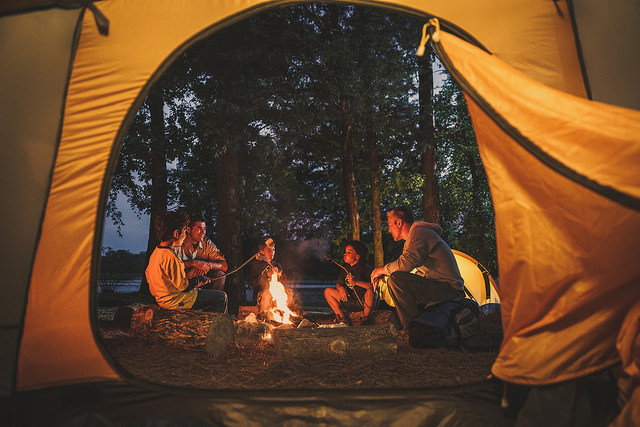
A simple evening program with songs, skits, stories, and s’mores creates the kind of memory that gets talked about on the ride home.
It does not need to be elaborate.
In fact, authentic usually works better than polished.
Families want to experience camp culture.
Let them.
Think About the Non-Scout Parent – For many parents, this may be their first time at your property.
This is your opportunity to showcase:
- The beauty of the camp
- The friendliness of your volunteers and staff
- The quality of your facilities
- The safety of the environment
- The value of outdoor experiences
Parents are evaluating the experience just as much as the kids are.
If they feel comfortable and welcomed, they are much more likely to return for future programs.
Make It Affordable and Easy – This should not feel expensive or complicated.
Simple pricing helps.
Offer options like:
- Family registration fee
- Bring-your-own-tent camping
- Limited rental tents if available
- Optional add-on meals
The easier the process is, the more likely families are to say yes.
Market the Experience, Not Scouting – This is important.
The event should be marketed primarily as a fun family outdoor experience.
Families who are not currently involved in Scouting may hesitate if they think they are signing up for a membership pitch.
Instead, focus the message on:
- Spending time together outdoors
- Trying camping in a safe environment
- Family adventure
- Summer fun
- Disconnecting from screens
- Affordable outdoor recreation
Also don’t overdo it on the uniforms either. A simple matching “staff” t-shirt so folks know who they can approach is better than a uniformed Scouter that may be perceived as unapproachable. Once they arrive and have a great experience, the conversations about Scouting happen naturally.
A Great Gateway to Camp – For councils looking for ways to introduce new families to camp properties, an easy one night event is a natural fit.
It is simple, and flexible.
It can scale to almost any size property or staff level.
Most importantly, it creates a low-pressure way for families to experience what camp is really about.
- Not advancement.
- Not schedules.
- Not logistics.
- Connection.
- Connection to the outdoors.
Connection to family.
Connection to experiences that people remember.
Sometimes all it takes is one good night at camp.

Camping
It is almost summer and that can only mean one thing…being in the OUTDOORS!
Saturday, June 8, 2024, is not just any ordinary day—it’s National Get Outdoors Day, and now is the time to gear up to make it an adventure-packed celebration for all our Scouts!
Now, I know you’re always on the lookout for ways to engage and excite your Scouting units and get them out to camp, and what better way to do that than by embracing the great outdoors? On National Get Outdoors Day, let’s make a pact to take our Scouting spirit beyond the usual confines of our meeting location and into the wilderness – or at least somewhere outside.
Here’s the game plan: let’s use this special day to schedule some epic outdoor activities. Think hiking, fishing, archery, you name it. It’s the perfect opportunity to introduce our newly recruited Cub Scouts, and Scouts BSA members to the thrill of outdoor adventures and get them hooked on the magic of Scouting. Maybe even use an event as a kickoff to the new Cub Scout program adventures related to the outdoors. You can choose from several outdoor electives for each rank.
But wait, there’s more! Circle another date on your calendar because June 27 is the “Great American Campout”. It’s a chance for us to come together as a Scouting community and celebrate the joys of camping under the stars. This event is also known as the “Great American Backyard Campout”, so you don’t have to make this a large event. The key is to get our Scouts outside camping and give them a chance to sleep in a tent or even under the stars. Nothing better than camping with the family outdoors or sitting around the campfire telling stories and sharing laughs. Well maybe making S’mores around the campfire could make it better.
And speaking of s’mores, mark August 10, 2024, on your calendar as well. This is one of our favorite “holidays” as it is National S’mores Day! It’s the perfect excuse to indulge in this camping classic and create some sweet memories with your Scouts.
Now, I know what you’re thinking. How do we make all of this happen? Well, it’s simple! Get your team together, brainstorm some exciting outdoor activities, and start spreading the word among your Scouts and their families on how you can celebrate Great Outdoors Month through one of these fun special “holidays”.
So, are you ready to answer the call of the wild and make June 2024, an unforgettable outdoor extravaganza? I sure hope so! Let’s show the world what Scouting is all about—adventure, camaraderie, and the great outdoors!
National Jamboree
The countdown is on! The National Jamboree is right around the corner, and your adventure starts now! From mastering your Scout skills to giving back to the community that hosts us, this is your chance to live in the true spirit of Scouting.
Join Food Drive — Scouting for a Cause!
As thousands of Scouts gather at the Summit Bechtel Reserve (SBR), we have a powerful opportunity to make a difference in West Virginia.
Who we’re helping:
Food banks across a 4–6 county area in West Virginia, beginning with all of Fayette County — home of the SBR. Every can and box you bring will help feed families in need.
Our goal:
Let’s donate 20,000 items to support our neighbors and show what the Scouting community can do together!
Best items to bring:
- Peanut butter (no glass)
- Boxed mac & cheese
- Spaghetti & canned pasta sauce (no glass)
- Canned vegetables & beans
Who can participate:
Everyone coming to the National Scout Jamboree! Even if you’re flying, toss a lightweight item like mac and cheese or spaghetti into your pack.
Prefer to donate money?
We’ll also collect financial donations to bulk-purchase items for the drive — every dollar helps. More information coming soon on how to make a secure financial donation!
Where to drop off:
Bring your items to the collection point at check-in and help us kick off Jamboree with an act of service that truly matters.
Let’s show the world that “A Scout is Helpful.”
Take on the Scout Skills Challenge!
Think you’ve got what it takes? The Scout Skills Challenge is your chance to test your patrol’s skills, teamwork, and grit in a high-energy competition inspired by the Jamboree experience.
Scouts will race against the clock to tackle core challenges like:
- Search & Rescue: Carry your teammate safely through a 75ft course
- Knots & Lashings: Tie and demonstrate essential Scouting knots
- Shelter Building: Construct a functional shelter using limited materials
- Fire Making: Build: and light a fire strong enough to burn through a suspended string
Top times from across the country will be posted to the National Leaderboard and featured at the National Jamboree, where Scouts from around the country will be competing to see who has the best time. Every participant who submits a score before the end of 2025 earns an exclusive National Jamboree sticker!
Get creative, compete with your patrol, and bring the Jamboree energy to your winter and spring camporees and summer camps — then carry that excitement to SBR for the 2026 National Jamboree.
Submit your score: bit.ly/jambo26skills_fb
This is more than preparation — it’s the first step in your journey to Elevate the Jamboree experience. Every knot tied, every can donated, every flame sparked lifts us closer to the unforgettable adventure awaiting at the Summit. Let’s Elevate our service, our spirit, and our commitment — living Scouting’s values boldly and proudly every step of the way.

National Jamboree
Every few years, Scouts from across the country gather for an unforgettable experience known as the National Jamboree. For Scouts, it’s a chance to build lifelong friendships, develop leadership skills, and experience the very best that Scouting has to offer. But for parents, guardians, or adult leaders who now have expanded opportunities to attend alongside their Scout, the experience can be just as transformative.
Here’s why going to the National Jamboree with your Scout is a decision you won’t regret, especially with new ways to participate.
-A Shared Adventure
In a time when screens dominate and family time can be rare, the Jamboree offers a unique chance to unplug and reconnect. Whether you’re cheering your Scout on as they conquer a high ropes course or swapping stories around the campfire, you’ll be part of their adventure in a way few parents ever get to experience.
–Witness Their Growth Firsthand
Scouts are constantly challenged at the Jamboree—physically, mentally, and emotionally. Being there means watching your child step outside their comfort zone, take on leadership roles, and grow more confident each day. It’s a front-row seat to their personal development and a powerful reminder of Scouting’s impact.
-Be Part of Something Bigger
The energy of the National Jamboree is unmatched. Tens of thousands of Scouts and volunteers come together to celebrate unity, service, and adventure. Being there in person—surrounded by people who believe in the mission of Scouting—reminds you that you’re part of a movement shaping the future of our youth.
-Support Their Journey
Your presence isn’t just about being there—it’s about being involved. Whether you’re helping with logistics, volunteering at a station, or simply offering encouragement, your support sends a lasting message: “I believe in you.” That message sticks with them long after the tents are packed up.
–Create Lifelong Memories
From the awe-inspiring opening show to spontaneous trading post runs and late-night laughter, the Jamboree is packed with unforgettable moments. Sharing those experiences with your Scout makes them even more meaningful—and creates memories you’ll both treasure for years to come.
New for 2026: Council Contingent Staff Member Option
In response to growing interest from councils and families, the 2026 National Jamboree now includes a new way for adults to attend: as Council Contingent Staff Members.
What’s New?
Councils may now register additional adults beyond the required contingent leaders. These adults will:
- Serve as Council Contingent Staff (must be 21+)
- Support Jamboree operations during the day
- Remain embedded with their contingent in the evenings
- Travel, eat, and camp with their contingent
Registration & Recognition
Adults serving as Council Contingent Staff Members will register through their local council as part of the contingent (council approval required). Councils must still follow the standard contingent sizes of 20 or 40.
Each Council Contingent Staff Member will receive the Participant Recognition Kit, which includes:
- Two participant patches
- A participant neckerchief
- A 2026 National Jamboree red daypack
- A special staff gift, distributed onsite
Refunds
To thank these volunteers for their service, each Council Contingent Staff Member will receive a $400 refund upon completion of the Jamboree—provided they:
- Serve for 6 of the 7 program days
- Complete any required pre-Jamboree training
- Coordinate with their team lead to fulfill their service schedule
Refunds will be issued to the council for distribution.
Ready to Join the Adventure?
Adults now have a new way to be part of the National Jamboree through the Council Contingent Staff Member role—helping behind the scenes while staying connected with their Scouts. It’s a chance to serve, support, and make lasting memories together.
Stay tuned for registration details and learn more at jamboree-scouting-org.scoutingorgstg.wpengine.com.
NCAP
Running a successful camp requires more than just creating memorable activities; it involves a constant commitment to improvement and safety. This is where a Continuous Camp Improvement Plan (CCIP) proves invaluable. As outlined in the CCIP Guide, a CCIP is integral to meeting standards set by the National Camp Accreditation Program (NCAP) and is part of the 5-year authorization process for camps. Let’s explore how a CCIP can support your council’s goals in camper experience, staff development, operational efficiency, and environmental stewardship, with specific reference to the guide’s insights and NCAP standards.
- Enhance the Camper Experience
At the heart of the CCIP is a focus on continually improving the camper experience. NCAP requires councils to incorporate feedback from campers and families, allowing camps to adapt to evolving camper expectations. A CCIP helps camps stay in tune with trends and adjust activities, facilities, and food options to ensure they remain engaging, relevant, and safe. Whether through upgrading equipment or adding new programs, a CCIP keeps the camp experience fresh and enjoyable.
- Strengthen Staff Training and Morale
According to the CCIP Guide (page 8), NCAP emphasizes the importance of ongoing staff training and development, a core component of a successful CCIP. By collecting feedback from staff and regularly updating training programs, a CCIP helps staff build new skills, manage challenging situations, and create a positive team culture. This fosters a supportive environment where staff feel valued and motivated, which ultimately enhances the camper experience.
- Ensure Safety and Compliance
Safety is paramount, and a CCIP provides the structure for camps to regularly review and refine their safety protocols. As noted on page 12, NCAP Standard AO-805 outlines that a CCIP should include routine assessments of safety procedures, emergency response plans, and legal compliance. Camps that adopt continuous safety improvements can reduce risks and assure parents that their children are in a secure environment, building trust and accountability.
- Increase Operational Efficiency
Operational efficiency is another essential area addressed by the CCIP. Councils should analyze processes such as registration, budgeting, and inventory management to identify areas for improvement. A CCIP enables camps to optimize resource allocation and improve day-to-day operations, freeing staff to focus on creating a great camper experience while also achieving cost savings and smoother logistical operations.
- Commit to Environmental Stewardship
A CCIP encourages camps to be mindful of their environmental impact and to respond to changing environmental conditions. NCAP requires councils to adopt sustainable practices that protect natural resources. From managing water and energy usage to promoting Leave No Trace principles, a CCIP fosters environmental responsibility among campers and staff, supporting long-term sustainability while cultivating a respect for nature.
- Build a Positive Camp Reputation
Camps that continuously improve their programs are better positioned to build a strong reputation. Councils should demonstrate responsiveness to camper feedback to enhance their program quality. This commitment can lead to increased camper retention, positive referrals, and stronger community partnerships. Parents are more likely to trust camps with an established record of listening to feedback and making meaningful improvements, which ultimately attracts new families and loyal campers.
- Foster a Culture of Growth and Innovation
A CCIP creates a culture where everyone—from staff to campers—is encouraged to innovate, take on new challenges, and strive for growth. Page 13 of the CCIP Guide details how a CCIP supports fostering a growth-oriented culture within the camp community. This approach ensures that camps not only adapt to changes but thrive, fostering an environment where campers and staff alike feel empowered to contribute ideas and improvements.
Key Steps to Launch a Continuous Camp Improvement Plan
- Gather Regular Feedback: Use surveys, interviews, and observation to collect insights from campers, staff, and families as a foundation for targeted improvements.
- Set Clear Goals: Define measurable objectives based on NCAP standards and feedback. These could focus on safety, camper satisfaction, or sustainability goals.
- Implement and Track Changes: Put action plans into effect and monitor progress through regular evaluations and staff check-ins.
- Review and Adjust Regularly: Schedule routine assessments to ensure continuous alignment with NCAP standards and adjust as needed.
Conclusion
A CCIP is essential for camps aiming to improve, adapt, and provide exceptional experiences in line with NCAP standards. By committing to continuous improvement, camps not only enhance camper enjoyment and safety but also build a lasting legacy that benefits everyone involved. A CCIP isn’t just about addressing issues—it’s about building a camp environment that campers and staff want to return to year after year.
Properties
After months and months of juggling maintenance projects, capital improvements and year-round camp visitors, summer camp is just days or weeks away! For our camp rangers and maintenance teams, maintaining camp during the summer camp season can be complex! With new and returning camp staff, hundreds of weekly visitors, and the inevitable breakdown of some piece of equipment, it can be stressful to keep camp “day 1” ready every day.
Here are a few suggestions of how you can leverage your summer camp staff to help them help you!
- Provide resources. Working alongside the camp director, ensure that camp staff understand what a clean, safe and hazard free environment looks like in their specific area and then provide camp staff with cleaning supplies and basic supplies to help you help them keep their respective areas clean and hazard free.
- Regular Inspections. Camp staff can conduct routine inspections of camp facilities, equipment, and grounds. See something? Say Something! They should report any issues, such as damaged buildings, broken equipment, or hazardous conditions, to the maintenance team promptly. This proactive approach can help prevent minor issues from becoming major problems. Make regular inspections a part of their daily camp routine in their assigned areas.
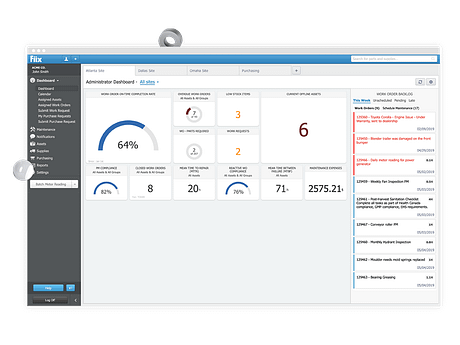
- Have a specific process to notify you when something needs maintenance and communicate it to camp staff. Is this via paper? Via FIIX or other CMMS software? Online? Via text? The easier the process, the more likely you will know when something needs immediate repair. Share a sample of a “work order” that meets your expectations so camp staff know what will best help them help you help them when they submit a work order.
- Promote a Culture of Care: Camp staff can help promote a culture of care and respect for camp facilities among campers and visitors. Encouraging campers to clean up after themselves, use facilities properly, and report any damage they notice can help prevent unnecessary wear and tear on camp facilities. By modeling this behavior as camp staff themselves, campers will also model this behavior.
By actively involving camp staff in camp maintenance efforts, camps can ensure that their facilities remain safe, functional, and enjoyable for all campers and visitors throughout the camp season.
Safety
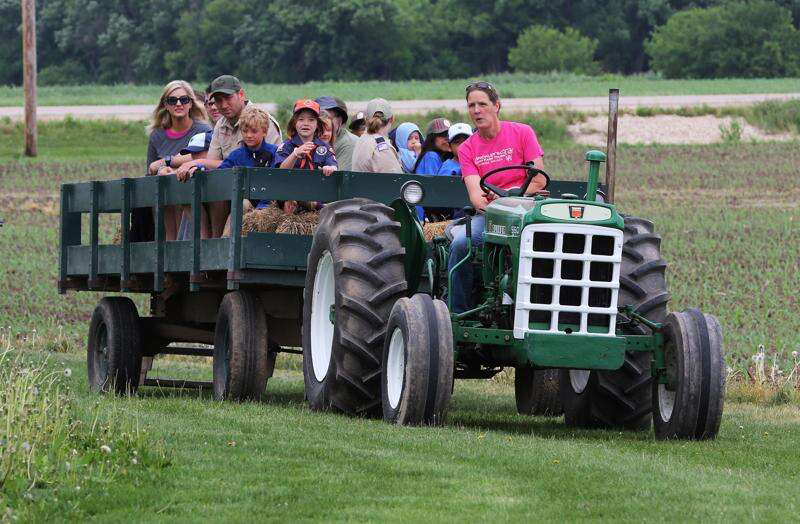
As the weather begins to cool and the season changes, now is the time that many of our units and councils are looking toward the holiday season and fall festivals. Many of these events include parades and hayrides or wagon rides. While these events are approved for Scouts of all ages there are a few things you need to remember in planning and executing a parade or hayride as a part of your camp or unit program.
In most circumstances the transportation of passengers in the back of a pickup truck or on a trailer is prohibited. The Guide to Safe Scouting specifically discusses the exception for hayrides and parades. (see Guide to Safe Scouting – Parade Floats and Hayrides)
So let’s start with a few SAFE tips for hayrides and parades:
Supervision: Active adult supervision is required for all Scouting activities, but especially ones where vehicles are involved. It’s a good idea to have leaders spread throughout your trailer, wagon, or truck bed near the open areas (like the access to the trailer, wagon or tailgate) to help with any unexpected bumps.
Assessment: Ensure that everyone is safe in the trailer or truck bed and that you are following the instructions listed in the Guide to Safe Scouting.
- Transportation to and from the parade or hayride site is not allowed on the truck or trailer.
- Those persons riding, whether seated or standing, must be able to hold on to something stationary.
- Legs must not hang over the side.
- Flashing lights must illuminate a vehicle used for a hayride after dark, or the vehicle must be followed by a vehicle with flashing lights.
Fitness and Skill: This involves not only the participants but the driver as well. All drivers of the tow vehicle need to be familiar with the proper procedures for towing vehicles. Additional training may be involved if the tow vehicle is a tractor or other farm type equipment.
Ensure all youth and adults who are participating in parades (especially if walking) are fit enough for the parade route. Many parades have elevation changes and some are lengthy so a health evaluation is important before you begin.
Equipment and Environment: Look at the equipment you are using for your hayride or parade and ensure that it meets the requirements for Scouts.
- Make sure no one can hang their legs over the side.
- Ensure that there is something stationary for everyone to hold onto even if seated.
- Keep an eye out for weather as the fall season changes rapidly. Make alternate plans if there is inclement weather forecast.
- Ensure that the trailer is properly secured to the tow vehicle. This could include proper sized tow hitch, chains and other safety measures.
- Ensure all participants are dressed properly for the weather and activity. If you are walking in the parade ensure that Scouts and leaders have water and proper footwear for the parade route.
Hayrides and parades are meant to be fun, but we, as leaders, must ensure they are safe, too. By following the Guide to Safe Scouting, you can make sure your Scouts are having the time of their lives, whether they’re waving to the community from a parade float or enjoying a hayride through a fall festival.
Wheels & Board Sports
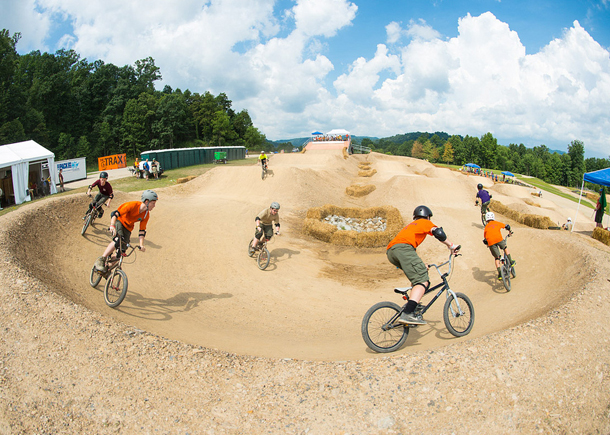
All Scouting America councils can benefit from cultivating knowledgeable local resources (volunteers, professionals, and consultants) to help districts, units, leaders, and families by providing program, health, and safety information and strategies for Wheels and Boards Sports. The council Wheels & Board Sports Committee oversees programs related to cycling, BMX, mountain biking, board sports, and winter sports.
This article discusses how to provide this support with a Wheels and Boards Sports Council Committee. One size does not fit all, but however you decide to organize your committee, the overall goal remains the same: provide support to Scouts and their leaders to participate in Wheels and Boards Sports in the Scouting program. Most Wheels and Board Sports committees will start with a limited number of goals that address the council’s most pressing needs. Over time, the work of the committee typically broadens as new opportunities are identified and volunteers are recruited. A successful committee is one that is responsive to the needs of its Scouting community.
This usually begins with an individual specialist or champion in the field of Wheels and Boards Sports—who advises leaders and fields questions from youth. Over time, as the council sees new opportunities, this group is often organized first as a subcommittee of the council program committee, but it can grow into much more. While it may start out with a particular focus, such a committee often expands to cover many different sports.
PURPOSES AND OBJECTIVES FOR A COMMITTEE
Each council knows its own needs and priorities best, and the charter of a Wheels and Boards Sports committee needs to reflect those priorities. The following list of possible purposes and objectives is more comprehensive than most councils have resources for. Do not let this overwhelm you. Instead, think of these as a menu of possibilities for your council to choose from. There is no single way to run such a committee, and no one expects a Council Wheels and Boards Sports committee to do everything listed below:
Training/Leader Development
- Develop volunteer leaders prepared to serve Scouts with Wheels and Boards Sports.
- Provide one-on-one consulting for leaders, Scouts, or families needing help with Scouting’s Wheels and Boards Sports.
- Organize and teach training sessions at the district or council levels (Roundtables, University of Scouting, College of Commissioner Science, camp staff, etc.).
- Support youth and adults with additional training.
- Recruit leaders/adults with Wheels and Boards Sports backgrounds to serve on training course staff.
- Disseminate newsletters and training materials developed by the national Wheels and Boards Sports committee.
- Support camp staff training.
- Promote and complete nomination procedures for BSA and non-BSA awards and recognitions for volunteers and youth involved in Wheels and Boards Sports programs.
- Encourage volunteers and professionals to attend national conferences at the Philmont Training Center, including the National Outdoor Conference.
Advancement
- Consult with Scouts, parents, guardians, and unit leaders supporting advancement requirements for Wheels and Boards Sports merit badges and awards.
- Advise the council Advancement Committee on Wheels and Boards Sports advancement as needed.
Commissioners
- Serve as a resource for commissioners.
- Maintain a library of reference literature that commissioners can use with units.
Liaison/Communication
- Recruit and maintain a Wheels and Boards Sports specialist for each sport.
- Assist with council websites and media communication to promote awareness of Wheels and Boards Sports programs.
- Share stories of Wheels and Boards Sports achievements by Scouts in your council.
- Identify people with specific skills or knowledge in Wheels and Boards Sports to serve as consultants or committee members.
- Maintain communication with the national Wheels and Boards Sports committee.
- Ensure that the needs of youth are included in the local council strategic plan, integrating key issues from the National Strategic Plan.
Camping/Program/Facilities
- Provide guidance and resources to the council, districts, and units for facilities, programs, and technology.
- Help with camp program designs for Wheels and Boards Sports (e.g., track and trail development and upkeep).
- Assist with district and council event planning when requested.
- Help train staff in the maintenance of Wheels and Boards Sports equipment (e.g., bikes, skis, helmets).
- Help train staff in trail and track maintenance.
- Consult with camp directors to create accommodations that allow all Scouts to participate in Wheels and Boards Sports activities.
- Recommend specialized equipment needed for Scouts with disabilities.
Membership & Finance/Development
- Identify and prioritize facility improvements and equipment purchases to increase access and opportunities in Wheels and Boards Sports.
- Assist the council in soliciting individuals, companies, and groups to fund improvements for Wheels and Boards Sports programs.
- Seek in-kind donations or loans of equipment and supplies.
- Provide tours of existing facilities to potential donors to showcase needs and plans.
- Report to supporters on how their resources have benefited youth.
- Assist in starting new Wheels and Board Sports units.
HOW TO CREATE A COUNCIL WHEELS AND BOARDS SPORTS COMMITTEE
Here is a recommended process for growing to the next level. The National Wheels and Boards Sports Committee is available to offer advice and support.
- The Council President, in consultation with the Scout Executive, recruits a committee chair.
- The Scout Executive appoints a staff adviser for the committee.
- Develop lists of:
- Local agencies, companies, and organizations that could partner with Scouting America for events, training, programs, and equipment.
- Potential chartered organizations and recruiting partners.
- Individuals and organizations that could be funding sources.
- The Council President, Scout Executive, committee chair, and staff adviser identify priorities and establish the committee’s initial charter.
- The chair and adviser recruit people with knowledge and interest in Wheels and Boards Sports to serve on the committee.
- Hold launch events/meetings at the district level to explain the committee’s purpose and benefits.
- Host training opportunities.
- Periodically reassess council needs and update the committee charter and membership as necessary.
RECRUITING ADVOCATES FOR A COMMITTEE
Great committee members have a passion for Wheels and Boards Sports and experience in specific sports. Many may already be Scout volunteers or involved in health and safety, sports, outdoor programs, or other council roles. Parents, coaches, and professionals in related sports organizations are also excellent candidates.
When recruiting, identify the skills needed to support your objectives, such as advancement knowledge or expertise in adaptive technology for Scouts with special needs.
ALTERNATIVE ORGANIZATIONAL STRUCTURES
Your council’s objectives will determine the best structure:
- A stand-alone committee reporting to the Council Executive Board.
- A subcommittee within the Program Committee supporting activities, advancement, camping, and training.
- A “matrix” committee of representatives from the Wheels and Boards Sports community led by council leadership.
Consider whether the committee chair should be a member of the council executive board and what title they should hold.
NATIONAL WHEELS AND BOARD SPORTS NETWORK
As of 2025, a national network is developing. The Wheels and Board Sports Subcommittee is part of the Outdoor Program and Properties Subcommittee. The goal is to have a Wheels and Boards Sports champion in each council.
This network aims to:
- Share best practices across Scouting America.
- Support program delivery.
- Address challenges and share adaptive technology for Scouts with special needs.
- Place knowledgeable specialists within councils.
- Provide health and safety guidelines.
The National Wheels and Boards Sports Committee supports councils in forming committees and identifying goals. Council chairs should have deep knowledge of Scouting America’s programs and regional laws and regulations related to Wheels and Boards Sports.
Email blast!
Email blast!