
Home > Skills > Merit Badges > Digital Resource Guides > MB – Citizenship in the World – Introduction & Overview > MB – Citizenship in the World – Requirement 4B
Merit Badges > Digital Resource Guides > Citizenship in the World > Requirement 4 (B)

Using resources such as major daily newspapers, the internet (with your parent or guardian’s permission), and news magazines, observe a current issue that involves international trade, foreign exchange, balance of payments, tariffs, and free trade. Explain what you have learned. Include in your discussion an explanation of why countries must cooperate in order for world trade and global competition to thrive.
Regardless of how a nation might choose to isolate itself from world events, it is not entirely self-sufficient. No nation’s economy can produce all the goods and services that its citizens demand, so it must exchange resources and products with other countries. This exchange among nations is called by various terms: international trade, global trade, foreign trade, and international commerce.
The concept of trade refers to the business of buying and selling products or bartering (exchanging one item for another).
Commerce is organized trade on a large scale and usually involves transporting products from place to place.
International Trade Agreements

International trade agreements are treaties that help countries trade more easily by lowering or removing trade barriers. One major agreement is the General Agreement on Tariffs and Trade (GATT), now overseen by the World Trade Organization (WTO). The WTO helps nations follow agreed‑upon rules to reduce tariffs and increase free trade.
Countries also strengthen their economies by forming regional trade alliances, which may:
Regional Trade Agreement Explained
Two examples are:
Some people argue that joining these groups means giving up a bit of national control, as these organizations have democratic values, meaning memberships require an understanding of common human rights and the rule of law. Many countries believe the economic benefits are worth it.
Free Trade Agreement Explained
Free Trade
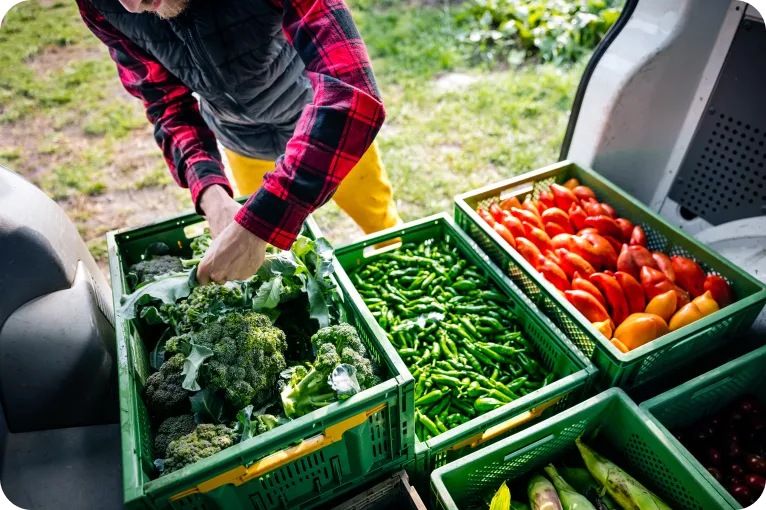
Sometimes domestic businesses feel hurt by cheaper imported goods and ask the government for protection. For example, if U.S. broccoli farmers struggle against cheaper foreign broccoli, they might request a tariff, which is a tax on imports. This makes imported broccoli more expensive, allowing local farmers to compete. Tariffs also bring in money for the government and reduce the number of imports.
Industries may also ask for quotas, which limit how much of a product can be imported. Both tariffs and quotas are called trade barriers because they restrict free trade. Some people believe these barriers protect jobs, while others think they hurt the economy by limiting choices and raising prices.
What is Free Trade?
Balance of Payments and Foreign Exchange
Nations are like big families with budgets. They shop, work, buy, and sell. At the end of the day, the money they spend should equal the money they earn. The balance of trade is the difference between what a country exports and what it imports. A surplus means it sells more than it buys; a deficit means it buys more than it sells.
To understand its full financial picture, a country also counts things like government purchases, investments, tourism, and foreign aid. All this together is called the balance of payments.
Countries use different currencies, so they need exchange rates to figure out how much one currency is worth compared to another. If the currency becomes stronger, its exports become more expensive. If it becomes weaker, its exports become cheaper. Exchange rates change daily.
Tourists feel this too—your money goes further in some countries than others, depending on the strength of your currency.
Nations try to keep their currency stable by holding international reserves of foreign money, often in U.S. dollars. Because many countries rely on the dollar, its value affects the global economy.
The world economy is connected. A disaster or political problem in one country can slow down production, create layoffs, and impact trade around the world. Understanding global trade helps us see the people behind the products—why some workers earn very little and why some countries struggle.
Balance of Payments Explained
What is an exchange rate?
Each nation’s currency is unique and not interchangeable. U.S. dollars are not the same as Indian rupees or Japanese yen. Nor are currencies called by the same name. The pesos of Argentina are different from the pesos used in Mexico. The dinars of Jordan, Kuwait, and Bahrain are not interchangeable, either. In contrast, the Euro is a currency shared among countries that have joined the European Union.
Each nation’s currency is unique and not interchangeable. U.S. dollars are not the same as Indian rupees or Japanese yen. Nor are currencies called by the same name. The pesos of Argentina are different from the pesos used in Mexico. The dinars of Jordan, Kuwait, and Bahrain are not interchangeable, either. In contrast, the Euro is a currency shared among countries that have joined the European Union.

Did You Know:
The International Monetary Fund is an international organization that encourages international trade and foreign exchange rate stability and offers balance-of-payments assistance to debtor nations. The IMF works with the World Bank to address the problems of the most heavily indebted developing countries.

Every nation can benefit from trading with others, but the way those benefits are shared depends on many factors. A country’s openness to international trade often reflects its political and economic systems. That’s where capitalism, socialism, and communism come into shape, and that’s how goods and services are produced, distributed, and exchanged across the globe. Capitalism emphasizes free markets and competition, socialism focuses on shared resources and social welfare, and communism aims for collective ownership. Understanding these systems helps explain why global trade looks different from one country to another—and why it matters to all of us.
Is a market‑based economic system where supply and demand guide decisions. Also called free enterprise, it features private ownership, profit motives, individual initiative, and competition. Entrepreneurs drive the economy by starting and running businesses, taking risks, and earning profits. Competition encourages companies to offer better quality at lower prices, giving consumers, workers, and business owners freedom of choice.
The U.S. economy is a mixed economy: the private sector produces most goods and services, while the government regulates and supports business through laws, infrastructure, research funding, and selective ownership of services such as Amtrak and Medicare. To increase sales, companies must keep quality high, prices low, and production efficient.
Is an economic and political system based on the belief that citizens should be economically and politically equal. Unlike the U.S., where people can have very different levels of wealth, socialist nations aim to distribute wealth more evenly through public ownership of major industries and centralized planning. In strict socialism, the government owns all businesses and controls production, investments, and social services—this is called a command economy.
Many modern countries, such as Sweden and Great Britain, blend free‑market practices with socialist policies, creating mixed economies. Socialist governments often control major industries like transportation and utilities while providing extensive social services such as health care, housing, and employment. These benefits are funded by high taxes.
Socialism ensures basic needs are met, but citizens may have less discretionary income and fewer choices about spending.
In the mid‑1800s, Karl Marx developed a theory arguing that history is driven by class struggle. He believed that capitalist business owners exploited workers and predicted that the workers would eventually revolt, leading to a classless society where property was commonly owned. Marx and Friedrich Engels outlined these ideas in The Communist Manifesto, and Marx became known as the father of modern communism. While some followers thought socialism could be achieved peacefully, Marx supported revolution. His supporters became known as communists.
A communist revolution in Russia in 1917 created the Soviet Union, and communism later spread across Eastern Europe and China after World War II. By the late 1980s, communism collapsed in Eastern Europe and the Soviet Union as people demanded more freedom. Today, only a few communist nations remain, such as Cuba and North Korea, while Vietnam and China keep one‑party rule but have added free‑market elements.
Some developing nations rely on centrally planned economies because they lack industrial experience, but focusing on only a few industries can lead to shortages and unrest, often resulting in authoritarian rule. To attract foreign investment, countries must offer stability, transparency, and access to market conditions that authoritarian governments often fail to provide.
World Trade and Global Competition: Organizing Key Ideas
Select your news article on international trade. With the permission of a parent or guardian, you will use the internet or other resources to research a current real-world news article that mentions one or more of the following topics:
Let’s dive deeper
When researching your chosen topic, consider these questions to guide your research.
Gather information such as:
Helpful tip:
Why countries must cooperate for world trade and competition to thrive:

Free Trade vs. Trade Barriers: Pros and Cons Explained




Digital resource guides for Fingerprinting & Cycling are now available. Check them out today!