

- All
- Aquatics
- Awards
- Biking
- Camp Staff
- Camping
- Conservation & Environment
- COPE/Climbing
- Cub Scouting
- Fishing
- National Jamboree
- National Outdoor Conference
- NCAP
- Outdoor Ethics/Leave No Trace
- Outdoor Programs - General
- Properties
- Range & Target Activities
- Safety
- Shooting Sports
- Special Needs
- Sponsored Content
- Wheels & Board Sports

Camping
Join us at Philmont Scout Ranch for the inaugural Camp Collaborative at Philmont, a week dedicated to strengthening camps and properties across Scouting through practical learning, collaboration, and hands-on training.
Participants will arrive Sunday, September 27 and depart Friday, October 2, selecting from a variety of courses designed to support the management, stewardship, and operation of Scouting’s camping operations. Many of the sessions will emphasize hands-on learning and practical skills that participants can take back and apply directly at their home camps.
This gathering is ideal for:
- Camp Rangers and Commissioned Scouters seeking annual continuing education
- Council staff and volunteers responsible for camp properties and operations
- Anyone interested in improving and strengthening their local camping operation
Courses will include topics such as:
- Capital improvements and property planning
- Utilizing your camp for year-round and non-Scout business
- Ranger continuing education with hands-on training in a variety of disciplines
- Risk management and safety outdoors
- Conservation and land stewardship
- Marketing your camp
- Wilderness First Aid Train-the-Trainer
Registration will start on April 6. Additional details and course selections will be announced soon.
Come learn new skills, share ideas, and collaborate with others who are committed to strengthening the camps that power Scouting. Time will also be set aside during the week to enjoy Philmont and experience the fall beauty. Questions? Email philmont.trainingcenter@scouting.org.
Outdoor Ethics/Leave No Trace
September 12-14, 2024
🌲 Unleash your adventurous spirit at the 2024 Scouting America National Outdoor Ethics & Conservation Conference! 🏕️ Mark your calendars for September 12th-14th at stunning Camp Tracy, just east of Salt Lake City, UT. But wait, there’s more! Dive into a week of pre-conference offerings from September 9th-12th, expanding your knowledge and expertise.
🔍 Explore the theme that will set us on a course for the future as we lean on our Outdoor Ethics and Conservation legacy: “Guiding Our Youth Into The Future ~ 70 Years Of The Outdoor Code.” Get ready for an unforgettable experience as we celebrate seven decades of the Outdoor Code and chart a course for the future.
📅 It’s never too early to save the dates – so lock them in NOW! Keep an eye on our Facebook page and website for exciting updates about the conference. This isn’t just a conference; it’s a journey into the heart of Scouting America Outdoor Ethics & Conservation. See you there! 🌿 #AdventureAwaits #OutdoorEthics2024

Aquatics
After careful consideration and evaluation, Scouting America will transition away from Scouting America Lifeguard certification program effective December 31, 2024. Over the last decade, training lifeguards across the entire aquatics industry has continued to evolve. While our partnership with the American Red Cross remains strong, the Red Cross materials will no longer be available to be used jointly for instruction of Scouting America’s Lifeguard program. In addition, Scouting America does not possess the scientific and other resources required to develop and update a Scouting America specific lifeguard training curriculum that meets the industry standards mandated through state and federal regulations.
Moving forward, we believe that partnering with well-established certifying agencies such as the American Red Cross, YMCA, StarGuard Elite, and Ellis & Associates will still allow us to offer local councils access to top-tier lifeguard training. We are confident that this approach will provide Scouting with quality training while also meeting industry standards. Our primary focus is on ensuring that every council has the support it needs to certify lifeguards for both summer camp and year-round aquatic activities.
We will provide further updates in the coming weeks to local councils and currently certified Scouting America Lifeguard Instructors/Aquatics Instructors to ensure everyone is well-informed about the next steps.
Finally, individuals currently certified as Scouting America Lifeguards may continue to use their certification until it reaches its expiration date. Individuals who are certified as Scouting America Lifeguard Instructors will receive additional information on how to potentially transition to an American Red Cross Lifeguard Instructor.
We appreciate your understanding and collaboration as we make this transition, and we are committed to working closely with each council to maintain the high levels of safety and preparedness that our Scouts and leaders expect and supporting local council lifeguard certification programs for summer camp and year-round aquatics programs. Additional information will be posted on this website as plans progress during this transition period.

Awards
The Adventure Plan (TAP), https://tap-scouting-org.scoutingorgstg.wpengine.com/, is a guide for Scouting unit leaders to focus Outdoor Adventure as a key element of youth development. With the challenges of virus concerns, masks, social separation, cancelled meetings and events, unit leaders are looking for ways to continue with progression and expansion of personal experiences. One way to expand unit programs is with outings to many National Historic Trail sites. Embedded in the TAP are links that make finding an approved trail very simple.
There are 210 historic trails in the United States, Europe, and Japan that are listed including links for individual researching. Finding a trail has been made easy with several new additions including a Google pushpin map!
All the trails meet Scouting America’s brand, have genuine historic significance and/or wilderness beauty that will add to the education of members of Scouting and provide the opportunity for physical fitness and outdoor living.
There are several ways to find a trail that is nearby and/or meets the needs of your Scouting unit. After logging into the TAP (see link above) go to the bottom of the page where you will find an internal link for “Historic Trails” and click select!
You can also select “Resources” to obtain the Historic Trails Award Application and then select the link in “Award Requirement”, item #1, https://tap-scouting-org.scoutingorgstg.wpengine.com/scouting-america-historic-trails-index/. Either method provides a listing of available historic trails. At this point, select an individual state/country to begin researching trails. Also, near the top of the page, is a button to “click HERE to Access Historic Trail map views.” By resizing the Google pushpin map, the same listing of trails is available.
Note: the index links send you to a local council web site where contact information is available. The use by Scouting units increases each year. Use this great resource to enjoy the outdoors.
Happy Hiking!
NCAP / Properties
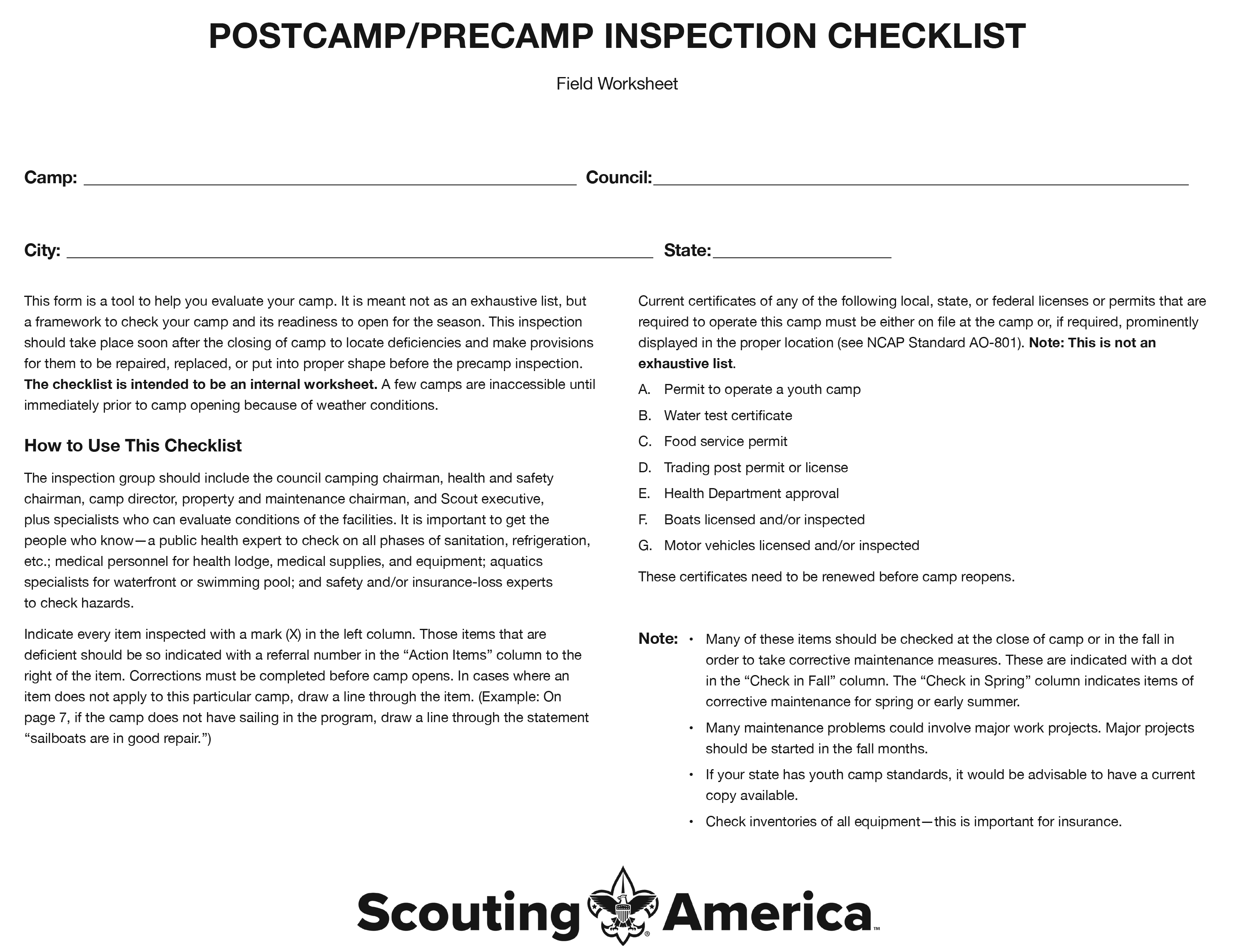
Scouting America is excited to announce the release of its newly updated Pre-Camp and Post-Camp Inspection Form, a comprehensive tool designed to enhance safety, sustainability, and organization during camping experiences. This updated form is now available for download and serves as an essential resource for Scout leaders to ensure their campsites are both ready for use and properly restored after each visit.
A Streamlined Process for Camp Management
The updated form simplifies the often complex process of campsite preparation and cleanup by offering a clear, step-by-step checklist. Covering key areas such as safety hazards, equipment inspections, waste disposal, and environmental restoration, the form ensures that no detail is overlooked. Its user-friendly format is designed for both experienced camp management professionals and volunteers and those new to the process, making it a versatile tool for all units.
Promoting Long-Term Planning
Beyond immediate use, the form is a powerful asset for long-term planning in local councils. By consistently documenting pre- and post-camp conditions, leaders can identify trends, recurring issues, and areas requiring maintenance or improvement. This data empowers councils to allocate resources more effectively, schedule necessary repairs, and proactively address environmental or safety concerns.
Ensuring Safety and Compliance
Safety is a cornerstone of Scouting, and the updated inspection form reinforces this value. Leaders can systematically assess potential risks, such as unstable ground or hazardous debris, ensuring a safe experience for all participants. Additionally, using the form helps units meet local regulations and Scouting America guidelines, demonstrating a commitment to responsible outdoor practices.
Per FA-701, the Pre-Camp and Post-Camp Inspection process should be completed before the Declaration of Readiness. For camp properties that serve solely as year-round camps, the review may be scheduled at the convenience of the council, so long as it is conducted annually .
Strengthening Local Councils
For councils, adopting the updated form ensures consistency and standardization across camp properties. The collective data gathered from multiple campsites can inform strategic planning, infrastructure improvements, and program development. By integrating the form into their operations, councils can better support their properties and enhance the overall quality of their programs.
A Tool for the Future
Scouting America’s updated Pre-Camp and Post-Camp Inspection Form is more than just a checklist—it’s a step toward a safer, more sustainable, and better-organized future. By embracing this tool, camp leaders and councils can elevate their camping programs and properties while preserving the natural environments that inspire generations of Scouts.
Get Started Today
Your council is encouraged to download the updated form and incorporate it into their property’s opening and closing procedures. By adopting this resource, camp management can contribute to a legacy of excellence, ensuring that every camping experience leaves a lasting positive impact on both participants and the environment.
Conservation & Environment
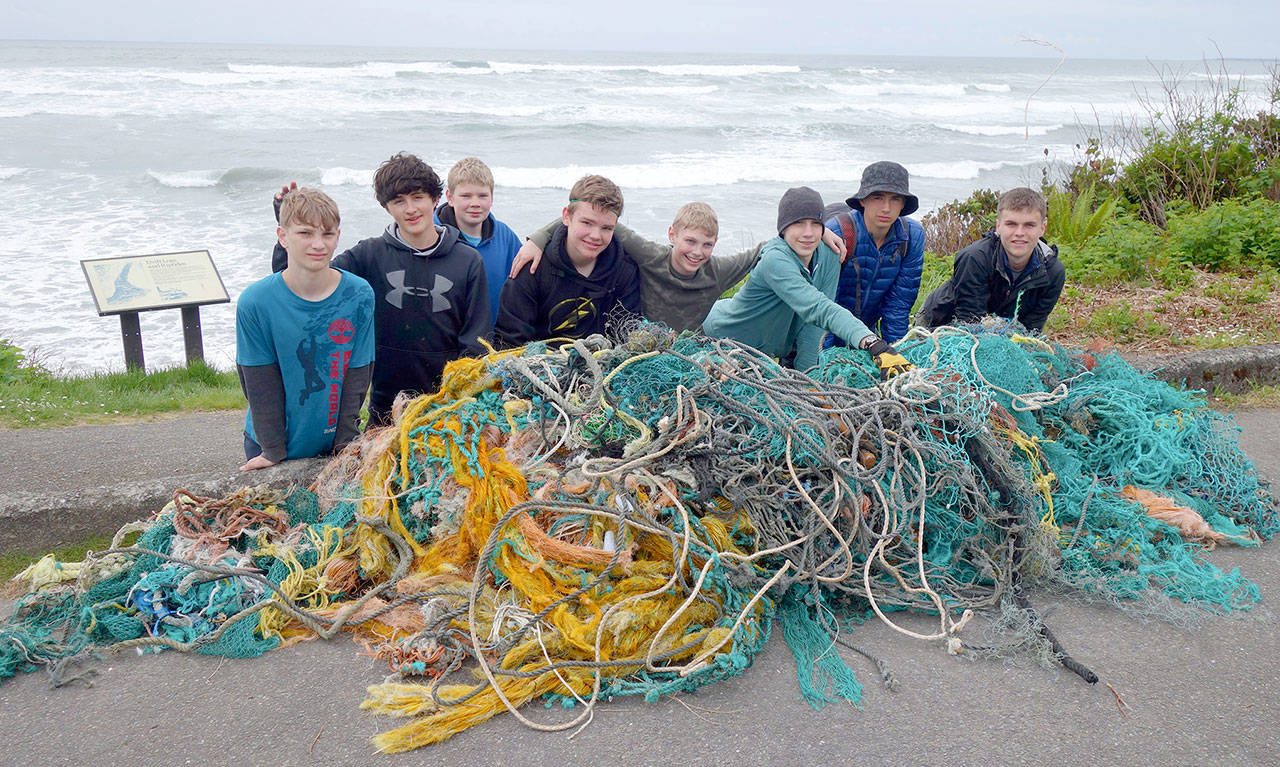
In celebration of the 70th anniversary of the Conservation Good Turn for America, Scouting America is introducing Scouting for Clean Waterways, a nationwide initiative aimed at addressing the critical issue of waterway and marine debris. This program, in partnership with Clean Hub and Goal Clean Seas Florida Keys, offers Scouts of all ages the opportunity to make a meaningful impact on the health of our waterway ecosystems. Clean Hub has agreed to match the poundage of plastics that Scouting America collects and removes from these areas and coordinate the collection in other countries. This partnership doubles the impact that we collect.
The concept of Scouting for Clean Waterways was launched as part of an existing Sea Base program in 2022. The program is coordinated by the National’s Outdoor Program & Properties Team, Outdoor Ethics & Conservation Subcommittee and the International Committee.
Why it matters
Each year, millions of tons of plastic and other man-made materials enter our water bodies, endangering marine life, disrupting habitats, and imposing economic costs. This aquatic trash often comes from dry lands miles away from our water resources. Aquatic trash poses a significant threat to the health of our oceans, lakes, rivers, and associated ecosystems. By participating in Scouting For Clean Waterways, Scouts can help address this critical issue and make a positive difference in their communities and beyond.
Scouting For Clean Waterways also supports several Sustainable Development Goals (SDGs) outlined by the United Nations, including:
- Clean Water and Sanitation
- Life Below Water
- Life on Land
- Responsible Consumption and Production
- Partnerships for the Goals
How can my unit get involved?
- Talk with your council’s leadership to see if they are planning on coordinating any large council or district events. If not, start organizing a clean up for everyone in your unit to participate.
- Visit the Scouting for Clean Waterways website: Here you can find all the program-related documents that will help you plan your unit’s Scouting for Clean Waterways service project including a Quick Guide to the program specifics, In addition to information about Scouting for Clean Waterways, at the bottom of the webpage you can also register to receive e-mail updates. Be the first to know about important program milestones and deadlines. The link to the SCW website is: https://stg.scouting.org/outdoor-programs/scouting-clean-waterways/.
- View and follow the Scouting for Clean Waterways Facebook page: This is another great resource when planning your SCW service project. Learn about best practices and successful projects completed by other units.
- Once you have completed your clean up, go to Scoutbook and enter it in the service hours area, and record it as a Scouting for Clean Waterways project. Your information will be recorded as part of the nationwide initiative. When you post pictures on your unit’s social media feeds, please include #cleanwaterscouts.
Units, Districts and Councils can conduct these clean ups any time through out the year. A lot of councils are aiming for April, May and June which coincides with Earth Day and Earth Month, but any time works. Unfortunately there is a lot of trash, so any and everything helps.
For specific questions please check the website, the Facebook page, or email cleanwaterscouts@scouting.org

Conservation & Environment
Waterways are the lifeblood of our ecosystems, supporting countless species and providing essential resources for human life. Unfortunately, pollution — especially marine debris like plastic waste — threatens these vital environments. To combat this growing issue, Scouting America has launched Scouting for Clean Waterways (SCW), a nationwide initiative empowering Scouts to take action in cleaning up rivers, lakes, streams, and oceans while promoting environmental stewardship and community service.
What Is Scouting for Clean Waterways?
Scouting for Clean Waterways officially begins on Earth Day (April 22, 2025) but your unit may start sooner! This program invites Scouts of all ages to participate in projects that reduce plastic waste, clean up waterways, and educate communities about conservation. SCW is designed to be simple yet impactful, allowing Scouts to make a difference regardless of their proximity to water bodies. Even trash collected from dry land can prevent pollution downstream.
How Scouts Can Participate
Participation in Scouting for Clean Waterways is straightforward and accessible:
- Reduce Plastic Use: Scouts are encouraged to cut down on disposable plastics in their daily lives.
- Cleanup Projects: On Earth Day—or any time throughout the year—Scouts can organize or join cleanup efforts near waterways or in local parks and recreation areas.
- Data Reporting: Scouts can log their cleanup results using Scoutbook+ to contribute to national conservation data.
- Share the Impact: By posting project details on social media with the hashtag #CleanWaterScouts, Scouts inspire others to join the cause.
Why It Matters
Marine debris poses a significant threat to ecosystems, wildlife, and even human health. Millions of tons of plastic enter waterways annually, disrupting habitats and endangering species. Scouting for Clean Waterways addresses this crisis by fostering community action and raising awareness.
Scott Anderson, chair of Scouting America’s outdoor ethics and conservation subcommittee, emphasizes the ripple effect of these efforts: “Just like a small stone creates expanding circles when dropped into water, Scouts doing individual actions to clean waterways will have far-reaching positive impacts”
Success Stories
Early projects have demonstrated the program’s potential:
- Units from across the country have already started to do projects. Florida, Virginia, Texas, Ohio, California and Texas have all had some of their waterways cleaned because of amazing Scouts, Scouters and their families.
Double the Impact with CleanHub Partnership
Through a partnership with CleanHub—a nonprofit dedicated to cleaning oceans—every pound of plastic debris collected by Scouts will be matched by overseas cleanups. This collaboration amplifies the program’s environmental impact globally.
Report your programs
Reporting the events that you have through Scoutbook+ is vital to show your success. When your unit creates the event in Scoutbook+ it will ask if this is an initiative, say yes and select Scouting for Clean Waterways. Report the poundage of trash and the poundage of plastics collected after the event. The hours spent and the number of participants is also important.
Remember – together we can make a difference in our waterways.
National Outdoor Conference
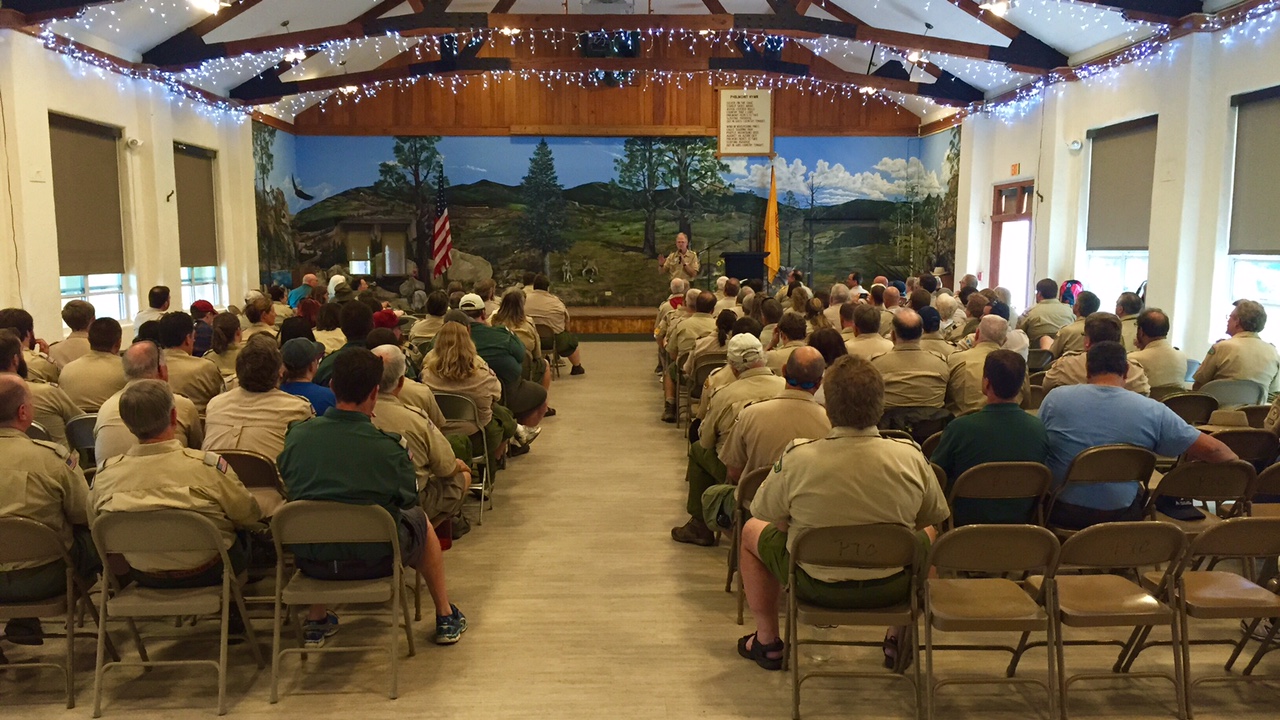
For Scouting professionals dedicated to delivering exceptional outdoor programs, there’s no better opportunity to grow than the 2025 National Outdoor Conference (NOC). More than just an event, NOC is a hub of inspiration, education, and connection—all set against the majestic backdrop of Philmont Scout Ranch. Here’s why every professional should make attending a priority:
Elevate Your Professional Development
In today’s fast-paced environment, learning is essential—and the National Outdoor Conference is built for it. With a wide array of classes, panels, and hands-on training opportunities, NOC empowers you to sharpen your skills in areas like:
- Risk management and safety
- Program design and innovation
- Leadership and strategic planning
- Sustainability in outdoor programs
Best of all, many of the sessions count toward your required Continuing Education Program (CEP) hours as outlined by Scouting America’s policy on professional development. Whether you’re attending courses on high-adventure programming or enhancing youth leadership skills, you can earn Professional Development Hours (PDHs) while gaining knowledge you can immediately apply back home.
Expand Your Network
The NOC is one of the largest gatherings of outdoor program experts, Scouting professionals, and volunteers from across the country. Over the course of the conference, you’ll have countless opportunities to:
- Swap ideas with your peers
- Share success stories and challenges
- Build a network of colleagues who can become trusted resources long after the conference ends
There’s nothing quite like learning from others who face the same opportunities and obstacles you do. These connections help you stay inspired and informed all year long.
Strengthen Relationships with Volunteers
One of the unique aspects of NOC is that it brings together both professionals and volunteers who share a passion for delivering high-quality outdoor programs. Attending with your local volunteers can:
- Deepen mutual understanding of goals and challenges
- Enhance teamwork back in your council
- Build trust and collaboration through shared experiences
A shared learning environment strengthens the partnership between staff and volunteers, which is essential for Scouting’s success.
Check Off Continuing Education Goals
Scouting America’s Continuing Education Program requires commissioned professionals to complete 20 PDH units each year. NOC is a fantastic way to make meaningful progress toward this goal in just a few days, all while focusing on topics directly tied to outdoor program excellence. Sessions align with critical areas like:
- Leadership and strategic thinking
- Problem-solving and adaptability
- Technology use and innovation
- Diversity and inclusion in outdoor programming
Plus, the knowledge you gain isn’t just about checking a box — it’s about enhancing your ability to serve youth through exceptional outdoor experiences.
Have Fun!
Let’s not forget: Scouting is FUN, and so is NOC! Beyond the sessions and seminars, you can expect:
- Engaging evening events
- Outdoor activities and demonstrations
- Informal meetups and social gatherings
NOC is as much about recharging your passion for the movement as it is about professional growth. You’ll return home energized, inspired, and ready to take your programs to the next level.
Make 2025 Your Year to Attend
The 2025 National Outdoor Conference is more than a conference — it’s an investment in your professional journey, your council’s success, and the future of Scouting’s outdoor adventures.
To learn more and register, visit: https://stg.scouting.org/outdoor-programs/noc/.
Special Needs
The Scouting America Special Needs Prepared Camp Program is designed to help parents and leaders of Scouts, and others, who have special needs to easily identify scout camps that have actively prepared to serve these Scouts’ needs at camp.
To that end, if your council completes the 11 items below for one or more of your council camps, you will receive a metal Special Needs Prepared Camp sign to display at camp. Perhaps more importantly, your council will be authorized to use the graphic on your electronic and print communications, showing national recognition of your preparations.
The National Camp Accreditation Program (NCAP) defines standards that apply to Scouting America camps. Program Design standard PD-110, “Program Accessibility for Persons With Special Needs” is specific to meeting the special needs of campers. Its interpretation is:
Specific requirement A [“To the extent practical and safe, Scouts with special needs are included in camp programs. An individual familiar with the conditions and abilities of participants is available to assist.”] means that the program of the camp is made available to Scouts with special needs whenever possible. If access is difficult, the camp should evaluate whether the program can be offered to the Scout in a different location or way. The camp should ensure that an individual familiar with the conditions and abilities of a participant with special needs is available to assist when needed. This individual can be a professional caregiver, a family member, or an individual designated by the participant’s parent or legal guardian who is familiar with the condition of the participant.
Scouting America, as a “private membership club or organization,” generally is not required to comply with the requirements of the Americans with Disabilities Act (ADA). However, the ADA references certain practices that should influence Scouting America’s Special Needs planning. The ADA provides a great amount of detail, including size needs and design considerations that, if followed, will allow many people with special needs to function at camp. You should also check whether there are any state or local laws that have more stringent requirements than those applicable under the ADA and comply with those laws.
1. Special Needs and Disabilities Including Non-Visible
Recognizing that not all special needs or disabilities are visible or immediately apparent is crucial for staff. Non-visible disabilities may include autism, ADHD, learning differences, mental health conditions, medical conditions, mobility issues, and sensory loss including loss of speech, sight, or hearing. Camp staff members, Scouts, and leaders may not be able to see these needs, but they still exist and require understanding and support. Staff should be prepared to use resources like Tranquility Base (a designated quiet/decompression space) and access the Inclusion Toolbox for Special Needs and Disabilities (the Inclusion Toolbox) developed by The National Special Needs and Disabilities Committee which can be found at ablescouts.org/toolbox, as well as community resources from schools and health organizations, to ensure all participants have a positive camp experience.
Additionally, have a plan for service animals at your property approved by your Scout Executive; for more information on service animals see ablescouts.org/toolbox/f.
2. Trail Systems
Preplan by hiking camp trails yourself so that you can ascertain accessibility, level of difficulty and time involved. Provide maps and other visuals to help prepare potential hikers, and have a Q & A page available for your trails. Maintain trails for safety, especially those designated for mobility accessibility. Two resources are:
- Accessible trails in your area: Outdoor Trail Resource for Wheelchairs
- Trail Link app – Your Guide to Trails – provides trail maps finder resource and biking www.traillink.com/activity/wheelchair-accessible-trails/#info
3. Campsite / Housing
Special Needs campsites should be on a firm, level surface. Ideally the pathways should be connected by level, well maintained pathways to the toilets, showers, roads, dining hall, campfire ring and other program areas. Tenting areas should have plenty of covered space to accommodate mobility and caregiver items. Using beds, rather than cots, provides added stability. Campers should be able to charge their required items near the campsites. ADA toilets/latrines and showers should be easily accessible in the campsite or nearby.
4. Showers and Bathrooms
Accessible showers and bathrooms should be private and large enough to accommodate wheelchair users, with seating in the showers and in the changing areas. Follow local building codes for the number of wheelchair accessible toilet and shower stalls. Both stall types should meet all ADA requirements, and showers should have handheld shower heads and low shelves for personal showering supplies. An ADA restroom should be near any special needs campsite and the changing area of the aquatics section of camps.
5. Program Areas
When preparing camp activities, plan program area capacity and resources based on the expectation that at least 12% of the total camper population may require some sort of accommodation. Use this statistic when planning your range and target activity stations and provide supportive adaptive equipment and/or higher/lower shooting benches. There should also be adaptive equipment in the COPE/climbing and aquatics areas. Check all your program areas for similar accessibility and access the Inclusion Toolbox Section BB at ablescouts.org/toolbox for more detailed information.
6. Buildings Entryways
Entryways can be the biggest barrier to a person with limited mobility, yet they can be one of the easiest issues to address. Eliminate the need to use steps leading into a building; whether it is one step or ten, steps make access more challenging to anyone who uses a cane, walker, or wheelchair. This can be addressed by providing an alternative entrance with a flat threshold or installing a ramp. Handicap-accessible entrance ramps, doors, and handrails should be compliant with all ADA requirements.
7. Main Campfire Areas
Wheelchair users should be able to access the main campfire area either independently or with assistance, such as being driven into the site safely through a main or back entrance. Once inside, there should be a safe and secure place for those with limited mobility to sit and enjoy the campfire. This space needs to be located where the den/patrol or ideally the whole unit can be seated together. Have adequately lit pathways for campfire movement. For those with low hearing/vision, provide a place near the front, again including space for their group. Make sure speakers’ faces are visible for those that lipread. Have an area available for those with sensory issues.
8. Health Lodge
Camps must strive for the highest level of accessibility in the health lodge, following best practices for inclusion for everyone. When developing, building, or remodeling, facilitators must prioritize removing barriers to participation. Key considerations include signage for all abilities (including braille and pictures at the proper height), handrails for stairs, ramps, and transfer areas, and accessible call bells with sound and visual emergency alarms. Ensure all areas have ample room for mobility (including caregivers), and that features like exam tables can lower and raise, and the shower/-bathroom is fully accessible.
The Scouting America training sessions for Camp Health Officers (CHO) for Day Camp and Short Term Camps and CHO Training for Long Term Camp provide useful resources for CHOs to ensure compliance with the policy and procedures to be used.
Regarding staff training, recognize that the health lodge should be used for medical needs, not behavioral redirection. Use Tranquility Bases (calming areas) or designated break areas instead of sending a camper to the health lodge for self-regulation. This operational approach enables staff to help the camper develop proper coping skills to face challenges. For more detailed guidance, staff should access ablescouts.org/toolbox, section AA.
9. Food Service and Diet
Camps follow the NCAP Standards for Commissary & Food Service: FS-601, 602, and 603. A licensed dietitian should be on call for consultation regarding special needs diets.
Staff must ensure that emails and phone calls are quickly relayed to the proper food service leads, providing contact information for follow-up with the camper and family. Staff must always check food ingredients for campers who inquire, as providing food that triggers a severe reaction can lead to life-threatening situations.
In the dining area, ensure there is reserved disability seating for wheelchair users. This accessibility can be achieved easily by using blocks under the legs of one or two dining tables to raise them to the required height. Be aware that the dining hall environment can trigger sensory overload due to noise and crowds, so staff should be prepared to direct campers to a designated quiet area where they don’t have to be alone.
10. Staff Training
Camp staff training is an integral part of the long-term camp experience following NCAP Standard SQ-402. Having staff aware of possible disabilities that they may encounter can provide an environment where all Scouts have access to a meaningful learning experience. The National Special Needs and Disabilities Committee has developed the Inclusion Toolbox for this very purpose. Each section of the toolbox is meant to be a stand-alone guide to areas commonly found in camp experiences. The published modules are extremely useful for training your staff. The keys to making this work are open lines of communication between parents/guardians and the camp/program director and between the camp/program director and those staff members having direct, hands-on contact with Scouts. It is vital to making the program developmentally and physically appropriate for these Scouts. Specific modules for resident camps are in sections AA and BB of the Inclusion Toolbox at: ablescouts.org/toolbox. Adapting programs to fit the needs of Scouts with visible and invisible disabilities has advantages for non-disabled Scouts as well.
Staff Training ideas:
Using Module BB-7, recognize that our long-term camps are often staffed by teenage Scouts, some of whom have limited work experience. The time for staff training prior to camp is limited and is subject to many demands under the NCAP process and state and local laws. At a minimum, these topics should be covered prior to camp:
- Inclusion of all Scouts, leaders, and guardians
- Assumption of ability
- When accommodations are needed, our mindset should be “how can we make this happen for the individual?”
- Resources
- Individual participant – Ask them what they need to feel comfortable
- Parent/guardian/unit leaders – What has worked in similar situations in the past
11. Pre-Camp Staff and Parent’s Meeting
A pre-camp staff and parent/Scout meeting should be arranged to set expectations and gather information for both parties before camp begins. This could happen using online options or in person. Make sure the information provided about a camper is disseminated to the relevant staff, especially those who will be working directly with them daily. Remind those receiving this information that they need to respect the privacy of the campers.
Also, as part of pre-camp planning, a staff member should coordinate with the parents, unit or group to arrange for the appropriate caretakers for the campers, if required for a Scout’s specific needs.
Do not forget to include all available special needs prepared information in your camp’s Leader’s Guide so that leaders, families, and the Scouts can better prepare for their camp experience.
Any questions, contact: the Special Needs Chair at Specialneedschair@scouting.org.
COMPLETE THIS SIMPLE FORM TO LEARN MORE!
Authored by: Sal Ciampo, Mark Chilutti, Britt Flather, RN, Steve Kappel, MD, Sandy Payne, LPN, Deb Reidmiller, Andrea Watson, Warren Wenner, Christopher Wynveen, PhD.
Update/Edited by: Janet Kelly, MSEd, Alyssa Hightower, Brent Worley – October 2025
NCAP
Scouting America summer camps serve as the ultimate playground for our Scout adventurers, fostering growth and unforgettable experiences. But behind every thrilling moment lies a team of dedicated staff. So, how do we ensure we assemble the best staff while ticking all the legal boxes? Let’s delve into the hiring process, including some of the vital legal considerations and savvy practices, and discover a fantastic platform for job postings: Scout Life Jobs.
The Role of Legal Considerations in Hiring Staff
Before diving into the hiring process, let’s address the legal side:
- Equal Opportunity Employment: Ensuring fair treatment for all applicants, regardless of race, gender, religion, or other protected characteristics, is vital. Review your hiring practices to ensure they are in compliance.
- Background Checks: To guarantee the safety of our Scouts, conducting thorough background checks for all potential staff members is a must. NCAP Standard SQ-401 requires every staff member of long-term camp and many day camp staff be registered in the specific camp staff code for their age. Doing so ensures an annual criminal background check and screening takes place.
- Compliance with Documentation: Completing all necessary employment paperwork diligently, including contracts, agreements, and required certifications, is crucial to maintain legal compliance. Review your documentation practices with your local HR attorney and double check your processes for each step. Certain states require additional documentation so be sure you are up to speed on state requirements. Looking for a resource? Check out the ACA’s State Laws and Regulations website.
- Know who you are hiring: There are specific requirements for youth to work along with job limitations based on age. Be sure to visit the department of labor website https://www.dol.gov/agencies/whd/youthrules/young-workers for more information.
Best Practices for Hiring Staff
- Start NOW and expand your search area: Initiating the hiring process in advance and leveraging various channels such as local Scout troops, universities, and online platforms widens the pool of potential candidates. Consider using online job postings. Make sure to include “summer job” page on your local council website. (Hint: use “Summer Job” vs the camp name and job title gets you better search results.)
- Thorough Screening and Interviews: Conducting comprehensive interviews to assess a candidate’s skills, experiences, and alignment with Scouting principles is essential.
- Embrace Diversity and Clarity: Striving for diversity in the staff team and ensuring clear communication about camp expectations and responsibilities fosters an inclusive and committed environment.
Leveraging Scout Life Jobs for Job Postings
For an excellent platform to post job opportunities within the Scouting community, consider using Scout Life Jobs:
- Targeted Audience Reach: This platform attracts candidates who are passionate about Scouting and the outdoors, ensuring a higher likelihood of finding individuals who resonate with your camp’s mission.
- User-friendly Interface: Both job seekers and recruiters benefit from its user-friendly layout, making the process seamless and accessible.
- Aligning with Scout Values: By using Scout Life Jobs, we reach individuals who understand and value the core principles of Scouting, fostering a team dedicated to upholding these values. Visit the Scout Life Jobs website and start posting your open positions today!
In Conclusion
In the realm of Scouting America summer camps, a stellar staff team is the bedrock of memorable experiences. By aligning our hiring practices with legal obligations, adopting smart strategies, and utilizing platforms like Scout Life Jobs, we can build a team passionate about creating enriching and safe experiences for our Scouts.

Shooting Sports
From BB gun shooting, archery, and sling shots at Cub Scouts to pistols and long rifles in Venturing, shooting sports can be an exciting experience for all Scouts in Scouting America. So how do you implement these programs, who can do what and what resources are available?
First one of the best resources for you to use when planning a shooting sports program is Scouting America’s National Shooting Sports manual posted on Scouting America shooting sports website. Newly revised in 2022, the National Shooting Sports Manual is the go-to location and one stop for all things Scouting America shooting sports related. The manual includes information about:
- Shooting sports programs by rank
- Required training and supervision
- Unit program
- District and council programs
- Specialty programs
The National Shooting Sports Manual contains information about all approved shooting sports of Scouting America. As stated in the Guide to Safe Scouting, if it is not listed in the shooting sports manual or our program literature, it is not an approved shooting activity. When there is a question, use this new resource as your guide.
In addition, Scouting America age appropriate guidelines can be found in the Guide to Safe Scouting. On this chart you will be able to determine the kinds of programs that are appropriate for your Scouts to enjoy. Scouting America shooting sports program offer a diverse group of options based on age and ability levels. Remember: Cub Scouts can only participate in shooting programs as a part of a district or council event. Shooting sports are not a unit activity in Cub Scouting.
Shooting sports can add adventure and fun to your unit program (for Scouts BSA, Venturing and Sea Scouting) or your district or council events and activities. Following the guidance in the updated Scouting America’s National Shooting Sports manual will ensure you are “on target” with your programs and that they will meet the standards of Scouting America. If you have questions about shooting sports, refer to the shooting sports manual or reach out to shooting.sports@scouting.org.

NCAP
Distracted driving poses a serious risk to everyone on the road, especially when driving to camp with Scouts. As we approach April, which is Distracted Driving Awareness Month, it’s crucial to remind Scouters and parents transporting Scouts about the dangers of not fully focusing on the road. According to the National Highway Traffic Safety Administration (NHTSA), distracted driving claimed 3,522 lives in 2021 alone, and the numbers have been increasing steadily.
There are three main types of distractions while driving: visual, manual, and cognitive. Visual distractions take your eyes off the road, manual distractions take your hands off the wheel, and cognitive distractions take your mind off driving. Texting while driving is one of the most dangerous distractions, as it involves all three types. Other common distractions include talking on the phone, eating, grooming, using navigation systems, and adjusting music or climate controls.
To ensure the safety of everyone on the road, especially when transporting Scouts, here are five tips to remember:
- Put your phone away: Avoid using your phone for calls, texts, or browsing while driving. If you must use your phone, pull over to a safe location. Encourage everyone to take the “It Can Wait” pledge.
- Plan ahead: Familiarize yourself with the route and directions before hitting the road. Use a GPS device or app that provides voice-guided directions.
- Secure loose items: Make sure all gear and equipment in the vehicle are properly secured to prevent them from becoming projectiles in the event of a sudden stop or crash.
- Avoid eating while driving: Eating can be distracting and take your hands off the wheel. If you need to eat, pull over to a safe location.
- Stay focused: Keep your mind on driving and avoid engaging in other activities that can take your attention away from the road.
April is the perfect month to reinforce these important principles to the Scouters and parents driving Scouts to camp this summer. You might consider including this topic in your Camp Leader Guide and mentioning this topic during your pre-camp leadership meeting (see NCAP standard PD-108). There are several resources you can utilize:
- BSA’s Distracted Driving Safety Moment
- Video – National Safety Council – Distracted Driving Calls Kill
- US Department of Transportation NHTSA Distracted Driving Resources
Email blast!
Email blast!