The Cycling merit badge promotes responsibility, discipline, and resilience by challenging Scouts with real‑world cycling skills. Through spotting hazards, practicing safe riding habits, and learning traffic rules, Scouts develop judgment and accountability. Gaining first-aid skills and caring for bikes fosters preparedness, independence, and attention to detail. Longer rides, especially those in requirement 6, demand goal-setting and perseverance. These experiences help Scouts become not just safer cyclists, but also more determined and capable individuals.
Overview
Since 1911, hundreds of thousands of Scouts have pursued the Cycling merit badge, making the most of their two‑wheel adventures while developing valuable skills. Whether a Scout is riding a bicycle for the first time or has years of experience, the badge provides an opportunity to gain a deeper understanding of the bicycle and its capabilities. As the most efficient human‑powered vehicle ever created, a bicycle allows a rider to travel four or five times faster than walking using the same amount of energy, and with increased effort, it is possible to cover 50, 75, or even 100 miles in a single day. The distance and pace a rider chooses are entirely within their control. When safety practices are followed and the bicycle is properly maintained, cycling can offer a lifetime of exploration and adventure—both within local communities and around the world.
How Bicycles Have Evolved Over Time
Bicycles have come a long way since the first chain-driven models of the late 1800s. The classic bike design—a diamond frame with two wheels, a chain-driven pedal system, handlebars, and a saddle—has stood the test of time, but today’s bikes take it to the next level with cutting-edge innovations.
The History of the Bicycle
In choosing a bike, ask yourself:
1) What kind of riding will I be doing?
2) Where will I be riding?
Types of Bikes
Prices also vary widely. As price increases, so does the overall quality of workmanship, materials, and components. The four primary types of bikes you will see are road bikes, mountain bikes, gravel bikes, and hybrid bikes.
Road Bikes
Designed for racing speed and efficiency on paved surfaces, road bikes feature dropped handlebars for multiple riding positions and reduced wind resistance. They typically have narrow tires for less rolling resistance, integrated shifters, and up to 30 gear combinations. Saddles are slim for long-distance comfort. Variants include touring bikes for extended rides with packs and gravel bikes for mixed terrain.
Mountain Bikes
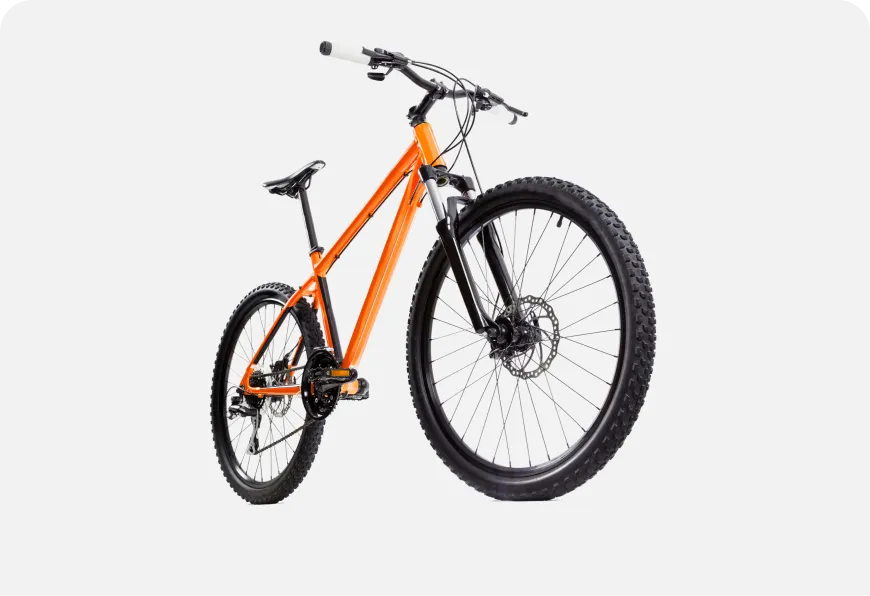
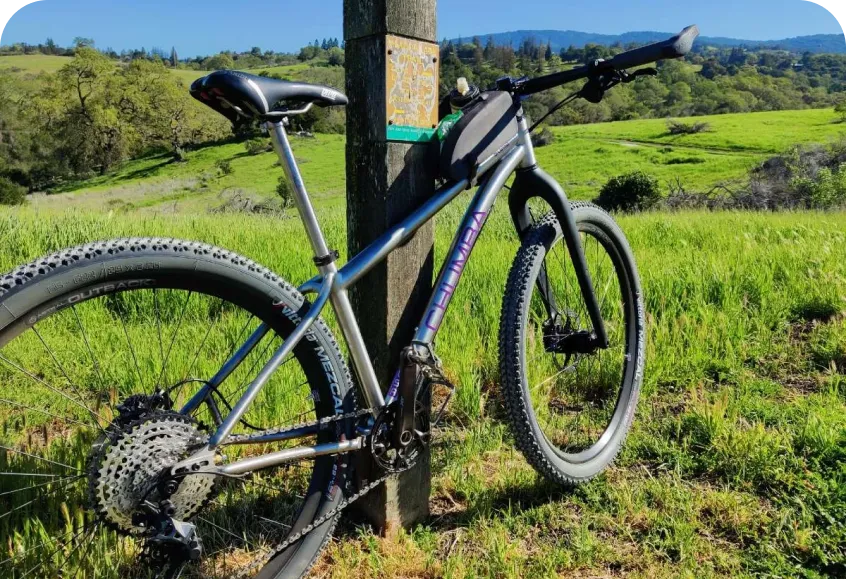
Mountain bikes (MTBs) are ideal for riding on unpaved terrain. They have a more heads-up riding position; larger, lower-pressure tires for better traction; and a wide range of gears. MTBs have sturdy, compact frames and flat handlebars for quick handling. Most MTBs have front suspension forks to absorb bumps, and many now have rear suspensions for even more comfort and control. Most modern MTBs have efficient disc brakes, and some even have hydraulic disc brakes.
Gravel Bikes
A gravel bike is a versatile bicycle that is designed to handle different kinds of terrain—paved roads, gravel paths, dirt trails, and even light singletrack. It combines features from both road and mountain bikes to create a comfortable and efficient ride on multi-surface terrain.
Gravel bikes have “drop” handlebars like road bikes. These let you put your hands in different positions for comfort on long rides. Mountain bikes use straight “flat” handlebars, which give you better control on rough, technical trails.
Most gravel bikes don’t have suspension, or they only have a small amount in the front. Mountain bikes usually have front suspension and sometimes rear suspension to help absorb big bumps and dips.
Gravel bikes are lighter and have skinnier tires than mountain bikes, which makes them faster on roads and smoother trails, but not as good for very rough terrain.
Hybrid Bikes
If you are going to be riding in the city or on multi-use trails, hybrid bikes, also called fitness bikes, are a blend of road and mountain bikes. They typically have a more upright riding position than a road bike and narrower tires than a mountain bike. These bikes are generally more comfortable than road bikes but aren’t as efficient, and, while they can be ridden on unpaved surfaces, they aren’t as capable of handling off-road conditions as a mountain bike. Hybrid bikes are a good choice for commuting.
Other Bikes
Comfort and cruiser bikes, with their heavier frames and wider tires, are suited for short trips on flat terrain.
BMX bikes are made for racing on bicycle motocross courses and trick riding. Their small wheels and lack of gears make them inefficient for road and trail riding.
BMX bikes, made for jumping and stunt riding, are small-wheeled and highly maneuverable.
Tandem bikes carry two riders, and are therefore, suitable for recreation or for some adaptive uses.
A tandem bicycle may give a visually impaired person the ability to ride. Both riders must work in a coordinated way to steer and power the bike safely.
Recumbent bikes place the rider in a reclined position with the legs extending ahead rather than down to pedal.
A recumbent bicycle or tricycle may be easier for a physically challenged person to power. Some are adapted so that they can be pedaled with the hands rather than the feet.
Folding bikes can be folded up and easily carried onto a bus, train, or private vehicle. These bikes are good for short touring and side trips when your primary mode of transportation is something other than a bike.
E-bikes with batteries and electric motors to assist the rider in pedaling are gaining in popularity. Road bikes, mountain bikes, and hybrid bikes can all now be found as e-bikes. Because they can allow a bike rider to go at speeds faster than they can control, e-bikes are generally not appropriate for beginning riders.
E-bikes are not appropriate for the requirements of this merit badge.
Did You Know:
Features like advanced gearing systems, lightweight carbon-fiber frames, and precision shifting make modern bikes faster, more efficient, and easier to ride. Plus, there’s a bike for nearly every purpose, from road racing to mountain trails to casual cruising.
Mountain Bikes: Choosing the Right Bike for the Right Use
Just as cycling on the road requires you to master certain skills and maneuvers, so too does trail riding. To get started on the right path to mountain biking, start by choosing the right bike for you.
Rigid mountain bikes have no front or rear suspension (shock absorbers). These bikes are great for riders with beginner to intermediate abilities because the lack of cushioning makes you feel every bump on the trail, encouraging you to take the smoothest line of approach. Rigid mountain bikes are also usually reasonably priced and easier to maintain than other types.
Hardtail mountain bikes have shock-absorbing suspension for the front wheel but no suspension for the back wheel. Front shocks allow the steering wheel to stay planted on the ground while riding over small bumps and improve overall handling and control. Hardtail bikes are designed for all abilities, tend to cost more than rigid bikes, and require good mechanical ability to service. Hardtails are best suited for intermediate to rough trail conditions.
Full-suspension mountain bikes use shock-absorbing suspension technology for the front and rear wheels. Shocks on both wheels improve handling and control at higher speeds by helping to smooth out rough terrain. Full-suspension bikes are designed for riders with intermediate to advanced abilities. They are more costly than rigid and hardtail mountain bikes and are usually the heaviest of the three types. Full-suspension bikes require the most maintenance to keep all their moving parts working correctly.
Now Let’s Explore the Requirements for the Cycling Merit Badge!