Scouting America

2026 May-June Edition

  • All
  • Aquatics
  • Awards
  • Biking
  • Camp Staff
  • Camping
  • Conservation & Environment
  • COPE/Climbing
  • Cub Scouting
  • Fishing
  • National Jamboree
  • National Outdoor Conference
  • NCAP
  • Outdoor Ethics/Leave No Trace
  • Outdoor Programs - General
  • Properties
  • Range & Target Activities
  • Safety
  • Shooting Sports
  • Special Needs
  • Sponsored Content
  • Wheels & Board Sports
Photographs

Properties

Operating a Scouting America camp is about more than delivering a great program—it’s about stewardship. Each camp is a long-term investment in youth development, leadership, and outdoor adventure. Protecting that investment requires consistent attention to facilities, safety, and operational discipline. Two essential practices that every camp should prioritize are completing the Camp Facilities Evaluation Tool (CFET) during the summer season and following thorough closing camp procedures at the end of camp. 

CFET: Evaluating While Camp Is Alive 

The CFET is most valuable when used during peak camp operations. While it may be tempting to complete evaluations before or after the season, those snapshots rarely capture the true impact of full camp usage. 

During the summer, camps are at maximum capacity. Trails are heavily traveled, program areas are in constant use, and infrastructure is pushed to its limits. This is when real issues surface. Conducting your CFET during this time allows leadership to: 

  • See how facilities perform under real Scouting conditions 
  • Identify safety hazards that only appear with regular use 
  • Address wear and tear in high-traffic program areas 
  • Ensure compliance with Scouting America standards 

For example, a rifle range backstop or waterfront dock may appear sound in the spring, but only after weeks of program use can staff identify shifting materials, loose boards, or safety concerns. A timely CFET allows those issues to be corrected immediately, protecting both Scouts and staff. 

Completing CFET during the summer ensures that Scouts experience a camp that reflects the values of preparedness and responsibility. It also models good stewardship—something every Scout is taught. 

The Importance of Closing Camp Procedures 

At the end of the season, closing camp properly is just as important as running it well. Camps that are shut down with care are far easier to reopen, safer to maintain, and less costly to operate over time. 

Effective closing procedures in a Scouting America camp should include: 

  • Deep cleaning and securing campsites, lodges, and program areas 
  • Documenting all maintenance needs identified during CFET and throughout the summer 
  • Winterizing or properly shutting down water systems, equipment, and utilities 
  • Storing program materials to prevent damage from weather, rodents, or time 
  • Conducting final walkthroughs and leadership signoffs 

Skipping these steps can lead to preventable issues such as burst pipes, structural damage, equipment loss, or unsafe conditions when camp reopens. 

The CFET and closing procedures are not separate tasks—they are part of a continuous cycle of camp improvement. 

What you identify during CFET should directly inform your closing process. For instance, if campsite platforms show significant wear, that should be documented, prioritized, and stabilized before winter. If trail erosion is noted, mitigation plans should begin before the off-season worsens the damage. 

This approach ensures that each camp season builds on the last, rather than repeating the same problems year after year. 

A Scouting America camp is more than a place—it’s a legacy. Completing your CFET during the summer and executing thorough closing procedures ensures that legacy remains strong, safe, and ready for the next generation of Scouts. 

Do the work when it matters most, finish the season with intention, and your camp will continue to deliver life-changing experiences for years to come. 


Climbing Jamboree

National Jamboree

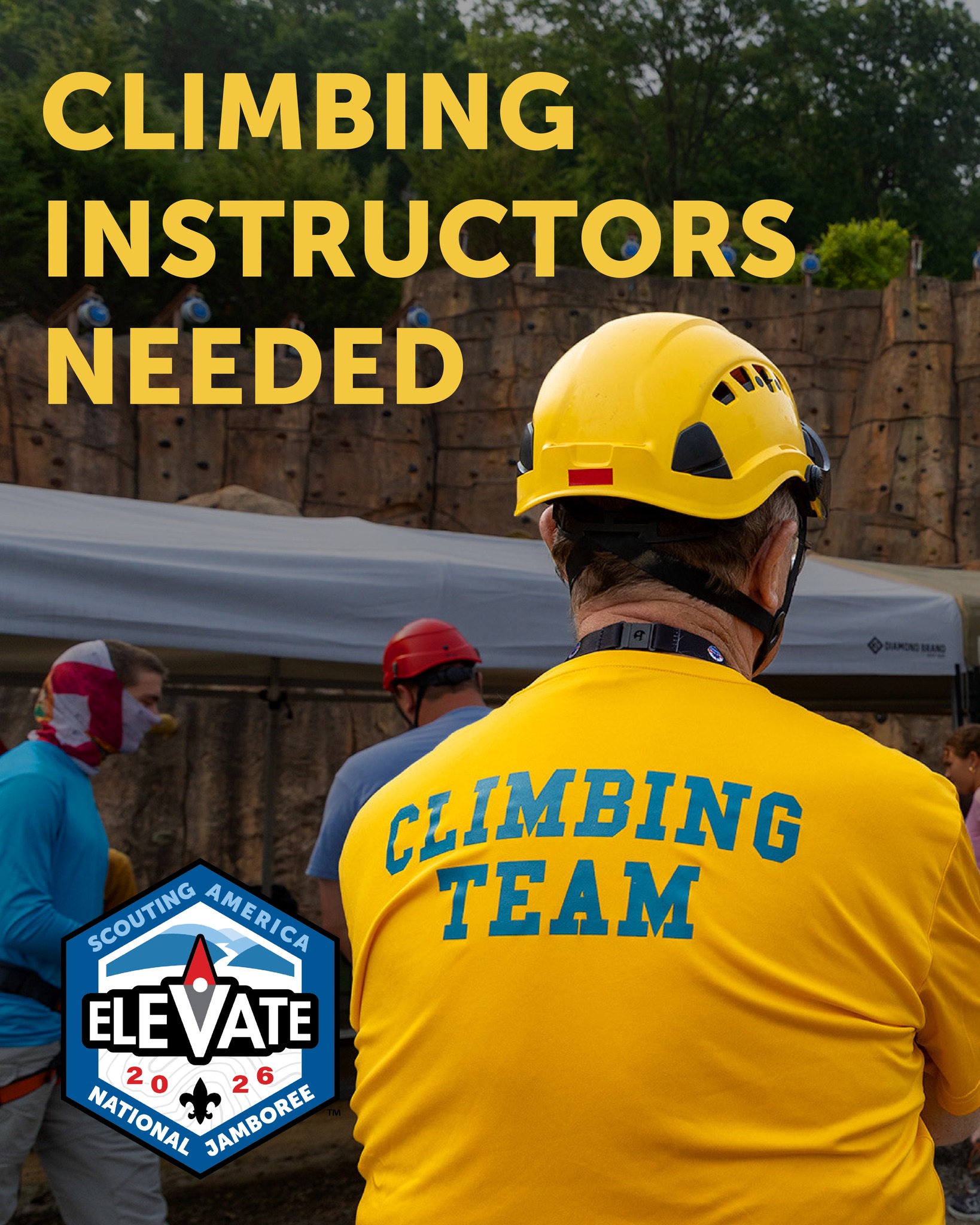
  • WHO? Summer camp staff who (a) work at a council summer camp in 2026,(b) will be 16 but not yet 30 by July 21, 2026, and (c) have their camp director’s recommendation or endorsement
  • WHAT? The Summit Climbing and Aerial Support Team (CAST) – your chance
    to experience Scouting America’s biggest activity – the National
    Jamboree – while supporting areas of critical need: the Climbing
    and Aerial (Zip, Canopy Tour, and Challenge Course) programs
  • WHEN? Three options: July 19-31, July 19-26, or July 26-31,
    early arrivals possible
  • WHERE? The Summit Bechtel Reserve:
    https://www.summitbsa.org/summitcast/
  • WHY? Experience staffing a huge event – Scouting America’s National
    Jamboree
    Gain a Level 1 certification in Climbing or COPE (ages 18+) and learn
    how to run these events safely and at scale
    Network with camp staff from around the country and Scouting
    America leadership
    Extend your summer of Scouting!
    Make memories that last a lifetime!
  • HOW MUCH? This is an unpaid staff position – meals and a special patch are provided in exchange for your service
  • HOW? Registration site below:
    https://bsasbr.workbrightats.com/jobs/1234044-221695.html
Fishing

Fishing

Few outdoor activities connect with Scouts as naturally and universally as fishing. 

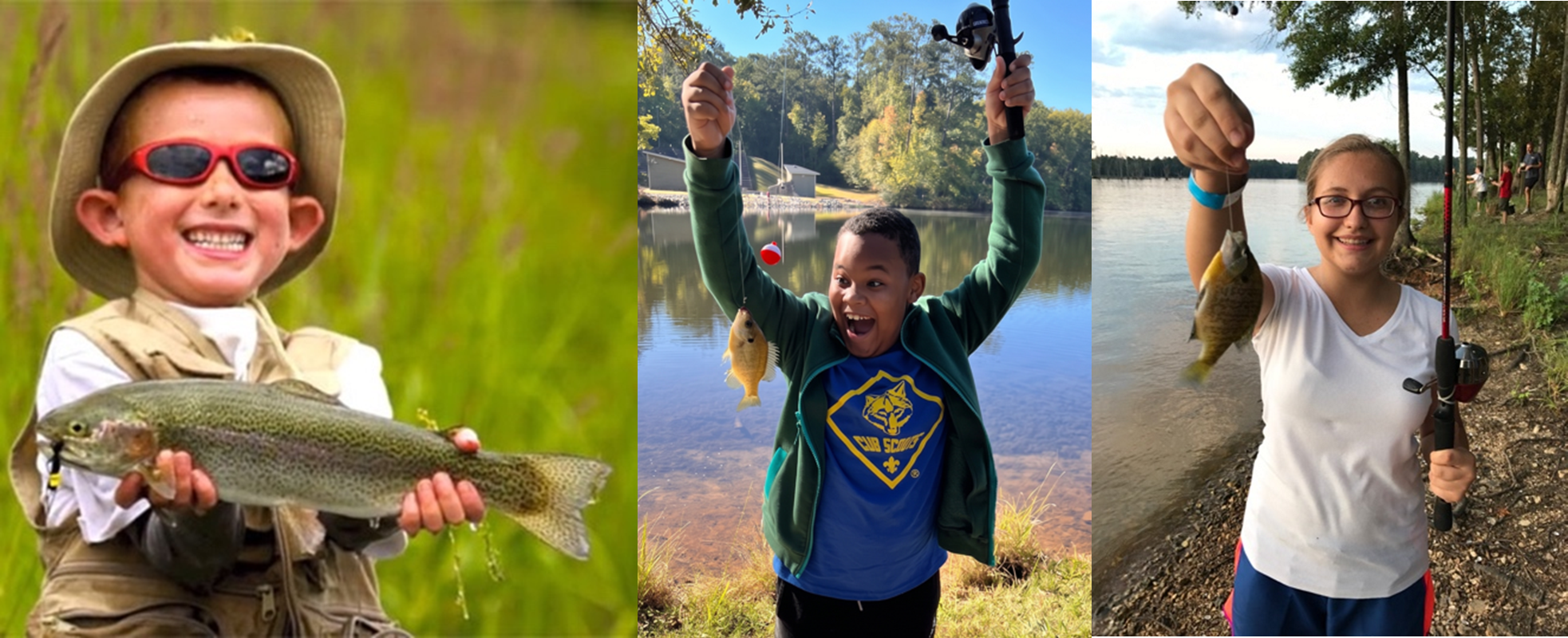
A Cub Scout grips the fishing rod tightly as the bobber disappears beneath the surface. A parent kneels beside them, coaching their Cub while excitement builds. Moments later, a bluegill breaks the surface of the water, and suddenly the shoreline erupts in cheers, laughter, and a smile that may last a lifetime. 

In councils across the country, leaders see this same moment play out every year. For many youth, that first fish becomes more than just a fun outdoor activity — it becomes a moment of confidence, connection, and discovery that deepens their relationship with Scouting and the outdoors. 

Fishing creates excitement for youth, strengthens outdoor programs, supports recruitment and retention, and helps families build lasting memories together. Fishing is also one of the rare outdoor activities that engages every age group within Scouting, bringing together youth, parents, leaders, and grandparents while creating opportunities for mentorship, confidence-building, and conservation education. 

Across the country, councils are increasingly using fishing as a tool to strengthen Recruitment, Retention, and Reactivation (R3). Fishing events are easy for new families to participate in, highly visible in local communities, and adaptable to nearly every council’s outdoor program. 

Fishing in Cub Scouts 

Cub Scouts love to fish, but many parents and unit leaders may not know how to safely teach fishing skills or organize successful fishing events. 

Scouting America offers Fishing Basics training, designed primarily for pack leaders, Cub Scouts, and their parents, while also supporting Scouts BSA leaders and volunteers. A Certified Angling Instructor (CAI) or Angling Educator (AE) teaches the Fishing Basics course. 

Fishing is now integrated into Cub Scout Adventures at every Cub Scout level, making it an increasingly important part of pack outdoor programming. Fishing activities work especially well at: 

  • Pack campouts  
  • Day camps  
  • District events  
  • Council outdoor weekends  
  • Public recruiting events at community ponds, lakes, parks, churches, and schools  

When conducted in visible public locations, fishing events can also become highly effective recruiting opportunities for new families. 

Councils looking to strengthen their Cub Scout fishing programs should seek out Certified Angling Instructors (CAIs) and Angling Educators (AEs) who can assist with training, program development, and event support. 

Additional Cub Scout fishing resources include: 

Fishing in Scouts BSA 

As Scouts grow older, many want to deepen their fishing knowledge and expand their skills. 

Fishing education within Scouts BSA centers around three key merit badges: 

  • Fishing  
  • Fly Fishing  
  • Fish and Wildlife Management  

Scouts who complete all three merit badges and complete additional fishing-related service or leadership activities may earn the Complete Angler Award. 

For many Scouts BSA members, summer camp or council fishing events become their first exposure to advanced fishing techniques, conservation practices, and structured outdoor instruction. Fishing opportunities are also available at all four national high adventure bases. 

Strong fishing programs strengthen troop and council outdoor programming by increasing youth engagement, supporting advancement, expanding outdoor skills, and encouraging conservation stewardship throughout the year. 

Building a Strong Council Fishing Program 

Councils looking to expand their outdoor program offerings should consider forming a dedicated Council Fishing Committee. 

As of this writing, more than 30 Council Fishing Committees are active nationwide, with additional committees currently in development. 

A successful council fishing program functions much like a three-legged stool: 

  1. It trains fishing instructors and program leaders
    Councils need qualified volunteers who can confidently teach fishing skills and support unit leaders.
  2. It provides age-appropriate fishing equipment
    Accessible gear helpseliminate barriers for youth and new families. 
  3. It develops access to productive fishing locations
    Especially for Cub Scouts, early success matters. Young Scouts who are not catching fish quickly often become frustrated, lose interest, and may never fish again. Successful councils work toidentify and maintain lakes and ponds with healthy fish populations where youth have a strong chance of catching a fish within a short period of time. 

The seat of the stool is the council’s outdoor program itself — recruiting events, Cub-O-rees, camporees, summer camp programs, training courses, and year-round fishing opportunities that bring all three elements together. In councils with established Council Fishing Committees, those committees often help lead and coordinate this work. 

Fishing programs can be scaled to fit nearly any council size or budget. Even modest programs can create meaningful impact when built around trained leadership and accessible local opportunities. 

Councils interested in learning more about establishing a Council Fishing Committee should watch for upcoming “How to Create A Council Fishing Committee” webinars scheduled for September 22 and September 24, 2026. 

For questions about creating a Council Fishing Committee, email: 

Bill Kalbas — mccfishing415@gmail.com  

The National Fishing Leadership Team 

The Scouting America National Fishing Leadership Team (NFLT) is composed of trained volunteer subject matter experts who support fishing education and program development across Scouting America. 

The NFLT oversees four levels of fishing instruction: 

  • Fishing Basics – Teaches pack leaders and parents how to take youth fishing.  
  • Angling Educator (AE) – How to teach fishing and run events at a council level. How to teach Fishing Basics.  
  • Certified Angling Instructor (CAI) – How to plan, run, and lead fishing programs at councils, camps, and national events. How to teach Angling Educator.  
  • Fishing Course Director (FCD) – How to plan and teach all of these courses.  

Since 2005, the NFLT and its Fishing Course Directors have trained nearly 5,000 Scouters to serve as fishing instructors at the unit, district, and council levels. More than 2,500 of those leaders — over half of all trained to date — have been trained since January 2024. 

The NFLT also serves as a subject matter expert resource supporting Cub Scout, Scouts BSA, and Venturing fishing advancement, program updates, leadership support, training curriculum development, and fishing resource development. In addition, the NFLT helps train staff and provide special-event support at national high adventure bases and major Scouting events. 

NFLT volunteers and CAIs nationwide have organized and operated fishing programs at National Jamborees, NOAC, VenturingFest, and Scouting America’s national high adventure bases. 

The team’s focus remains simple: help more youth successfully learn to fish, enjoy the outdoors, and strengthen their connection to Scouting through meaningful outdoor experiences. 

Fishing Resources for Councils and Leaders 

Scouting America fishing resources are available online at: 

For questions on Scout fishing resources and training, email: fishing.scoutingamerica@gmail.com 

At its core, fishing in Scouting is not just about catching fish. 

It is about creating confidence, mentorship, outdoor connection, conservation awareness, family participation, and lifelong memories. 

Every new Cub and Scout who learns to fish gains more than a skill — they gain confidence, patience, outdoor awareness, and a connection to Scouting that can last a lifetime. 

“We measure our success in smiles.”

Camping-shot

Camping

June 27 is Great American Campout Day, and for councils and camp leaders, this is one of the easiest opportunities of the summer to introduce new families to camping. 

Families are already looking for affordable things to do together in the summer. They are looking for activities that get kids outside, off screens, and doing something different. Many of them are interested in camping but they just don’t know where to start. 

That is where councils can step in. 

A simple one-night family campout at your property can become a great entry point for families who are not currently involved in Scouting. It does not need to be complicated. In fact, the simpler it is, the better. 

This is not about building a massive event with a packed schedule and dozens of moving parts. This is about creating a positive outdoor experience that makes families say: 

“We should do this again.”, “We can do this.”, “It was fun.” 

And ideally: 

“We should come back to camp.” 

Here are 7 tips for success.  

Keep the Barrier to Entry Low – One of the biggest mistakes camps make with family events is assuming everyone already knows how to camp. 

Most non-Scout families do not. 

They are wondering: 

  • Do we need special equipment? 
  • What if we don’t know how to set up a tent? 
  • Are there bathrooms? 
  • What do we bring? 
  • Will our kids even enjoy this? 

The goal should be to make this feel approachable. 

A one-night campout works well because families can try camping without feeling like they are committing to an entire weekend or weeklong experience. 

Councils should focus on: 

  • CLOSE TO HOME – Families need to be able to “bail out” in the middle of the night if things don’t go well for their family.  
  • Clear communication beforehand 
  • Simple packing lists 
  • Easy parking and check-in 
  • Volunteers or staff helping families set up tents 
  • Access to restrooms and water 
  • Activities that are fun but not overprogrammed 

The experience should feel welcoming, relaxed, and easy. 

Do Not Overbuild the Program – This is one of those events where less is often more. 

Families don’t need a minute-by-minute schedule. 

Give them opportunities to experience camp together. 

Some of the best activities for an event like this are also the simplest: 

  • Fishing 
  • Nature walks 
  • Simple Craft they can take home 
  • Open field games 
  • Outdoor cooking demos 
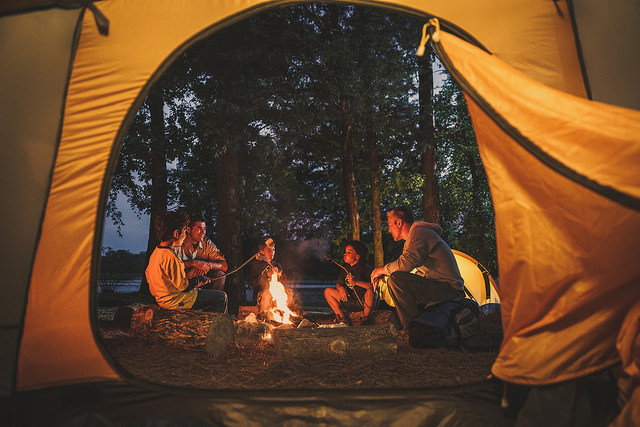
  • Campfire program with songs and s’mores 

The goal is not advancement. 

The goal is fun. 

The Campfire Matters 

If there is one thing families will remember, it is the campfire. 

A simple evening program with songs, skits, stories, and s’mores creates the kind of memory that gets talked about on the ride home. 

It does not need to be elaborate. 

In fact, authentic usually works better than polished. 

Families want to experience camp culture. 

Let them. 

Think About the Non-Scout Parent – For many parents, this may be their first time at your property. 

This is your opportunity to showcase: 

  • The beauty of the camp 
  • The friendliness of your volunteers and staff 
  • The quality of your facilities 
  • The safety of the environment 
  • The value of outdoor experiences 

Parents are evaluating the experience just as much as the kids are. 

If they feel comfortable and welcomed, they are much more likely to return for future programs. 

Make It Affordable and Easy – This should not feel expensive or complicated. 

Simple pricing helps. 

Offer options like: 

  • Family registration fee 
  • Bring-your-own-tent camping 
  • Limited rental tents if available 
  • Optional add-on meals 

The easier the process is, the more likely families are to say yes. 

Market the Experience, Not Scouting – This is important.  

The event should be marketed primarily as a fun family outdoor experience. 

Families who are not currently involved in Scouting may hesitate if they think they are signing up for a membership pitch.  

Instead, focus the message on: 

  • Spending time together outdoors 
  • Trying camping in a safe environment 
  • Family adventure 
  • Summer fun 
  • Disconnecting from screens 
  • Affordable outdoor recreation 

Also don’t overdo it on the uniforms either. A simple matching “staff” t-shirt so folks know who they can approach is better than a uniformed Scouter that may be perceived as unapproachable. Once they arrive and have a great experience, the conversations about Scouting happen naturally. 

A Great Gateway to Camp – For councils looking for ways to introduce new families to camp properties, an easy one night event is a natural fit. 

It is simple, and flexible. 

It can scale to almost any size property or staff level. 

Most importantly, it creates a low-pressure way for families to experience what camp is really about. 

  • Not advancement. 
  • Not schedules. 
  • Not logistics. 
  • Connection. 
  • Connection to the outdoors. 
    Connection to family. 
    Connection to experiences that people remember. 

Sometimes all it takes is one good night at camp. 


special-needs-prepared-camps

Special Needs

The Scouting America Special Needs Prepared Camp Program is designed to help parents and leaders of Scouts, and others, who have special needs to easily identify scout camps that have actively prepared to serve these Scouts’ needs at camp.

To that end, if your council completes the 11 items below for one or more of your council camps, you will receive a metal Special Needs Prepared Camp sign to display at camp. Perhaps more importantly, your council will be authorized to use the graphic on your electronic and print communications, showing national recognition of your preparations.

The National Camp Accreditation Program (NCAP) defines standards that apply to Scouting America camps. Program Design standard PD-110, “Program Accessibility for Persons With Special Needs” is specific to meeting the special needs of campers. Its interpretation is:

Specific requirement A [“To the extent practical and safe, Scouts with special needs are included in camp programs. An individual familiar with the conditions and abilities of participants is available to assist.”] means that the program of the camp is made available to Scouts with special needs whenever possible. If access is difficult, the camp should evaluate whether the program can be offered to the Scout in a different location or way. The camp should ensure that an individual familiar with the conditions and abilities of a participant with special needs is available to assist when needed. This individual can be a professional caregiver, a family member, or an individual designated by the participant’s parent or legal guardian who is familiar with the condition of the participant.

Scouting America, as a “private membership club or organization,” generally is not required to comply with the requirements of the Americans with Disabilities Act (ADA). However, the ADA references certain practices that should influence Scouting America’s Special Needs planning. The ADA provides a great amount of detail, including size needs and design considerations that, if followed, will allow many people with special needs to function at camp. You should also check whether there are any state or local laws that have more stringent requirements than those applicable under the ADA and comply with those laws.

1.       Special Needs and Disabilities Including Non-Visible

Recognizing that not all special needs or disabilities are visible or immediately apparent is crucial for staff. Non-visible disabilities may include autism, ADHD, learning differences, mental health conditions, medical conditions, mobility issues, and sensory loss including loss of speech, sight, or hearing. Camp staff members, Scouts, and leaders may not be able to see these needs, but they still exist and require understanding and support. Staff should be prepared to use resources like Tranquility Base (a designated quiet/decompression space) and access the Inclusion Toolbox for Special Needs and Disabilities (the Inclusion Toolbox) developed by The National Special Needs and Disabilities Committee which can be found at ablescouts.org/toolbox, as well as community resources from schools and health organizations, to ensure all participants have a positive camp experience.

Additionally, have a plan for service animals at your property approved by your Scout Executive; for more information on service animals see ablescouts.org/toolbox/f.

2.       Trail Systems

Preplan by hiking camp trails yourself so that you can ascertain accessibility, level of difficulty and time involved. Provide maps and other visuals to help prepare potential hikers, and have a Q & A page available for your trails. Maintain trails for safety, especially those designated for mobility accessibility. Two resources are:

3.       Campsite / Housing

Special Needs campsites should be on a firm, level surface. Ideally the pathways should be connected by level, well maintained pathways to the toilets, showers, roads, dining hall, campfire ring and other program areas. Tenting areas should have plenty of covered space to accommodate mobility and caregiver items. Using beds, rather than cots, provides added stability. Campers should be able to charge their required items near the campsites. ADA toilets/latrines and showers should be easily accessible in the campsite or nearby.

4.       Showers and Bathrooms

Accessible showers and bathrooms should be private and large enough to accommodate wheelchair users, with seating in the showers and in the changing areas. Follow local building codes for the number of wheelchair accessible toilet and shower stalls. Both stall types should meet all ADA requirements, and showers should have handheld shower heads and low shelves for personal showering supplies. An ADA restroom should be near any special needs campsite and the changing area of the aquatics section of camps.

5.       Program Areas

When preparing camp activities, plan program area capacity and resources based on the expectation that at least 12% of the total camper population may require some sort of accommodation. Use this statistic when planning your range and target activity stations and provide supportive adaptive equipment and/or higher/lower shooting benches. There should also be adaptive equipment in the COPE/climbing and aquatics areas. Check all your program areas for similar accessibility and access the Inclusion Toolbox Section BB at ablescouts.org/toolbox for more detailed information.

6.       Buildings Entryways

Entryways can be the biggest barrier to a person with limited mobility, yet they can be one of the easiest issues to address. Eliminate the need to use steps leading into a building; whether it is one step or ten, steps make access more challenging to anyone who uses a cane, walker, or wheelchair. This can be addressed by providing an alternative entrance with a flat threshold or installing a ramp. Handicap-accessible entrance ramps, doors, and handrails should be compliant with all ADA requirements.

7.       Main Campfire Areas

Wheelchair users should be able to access the main campfire area either independently or with assistance, such as being driven into the site safely through a main or back entrance. Once inside, there should be a safe and secure place for those with limited mobility to sit and enjoy the campfire. This space needs to be located where the den/patrol or ideally the whole unit can be seated together. Have adequately lit pathways for campfire movement. For those with low hearing/vision, provide a place near the front, again including space for their group. Make sure speakers’ faces are visible for those that lipread. Have an area available for those with sensory issues.

8.       Health Lodge

Camps must strive for the highest level of accessibility in the health lodge, following best practices for inclusion for everyone. When developing, building, or remodeling, facilitators must prioritize removing barriers to participation. Key considerations include signage for all abilities (including braille and pictures at the proper height), handrails for stairs, ramps, and transfer areas, and accessible call bells with sound and visual emergency alarms. Ensure all areas have ample room for mobility (including caregivers), and that features like exam tables can lower and raise, and the shower/-bathroom is fully accessible.

The Scouting America training sessions for Camp Health Officers (CHO) for Day Camp and Short Term Camps and CHO Training for Long Term Camp provide useful resources for CHOs to ensure compliance with the policy and procedures to be used.

Regarding staff training, recognize that the health lodge should be used for medical needs, not behavioral redirection. Use Tranquility Bases (calming areas) or designated break areas instead of sending a camper to the health lodge for self-regulation. This operational approach enables staff to help the camper develop proper coping skills to face challenges. For more detailed guidance, staff should access ablescouts.org/toolbox, section AA.

9.       Food Service and Diet

Camps follow the NCAP Standards for Commissary & Food Service: FS-601, 602, and 603. A licensed dietitian should be on call for consultation regarding special needs diets.

Staff must ensure that emails and phone calls are quickly relayed to the proper food service leads, providing contact information for follow-up with the camper and family. Staff must always check food ingredients for campers who inquire, as providing food that triggers a severe reaction can lead to life-threatening situations.

In the dining area, ensure there is reserved disability seating for wheelchair users. This accessibility can be achieved easily by using blocks under the legs of one or two dining tables to raise them to the required height. Be aware that the dining hall environment can trigger sensory overload due to noise and crowds, so staff should be prepared to direct campers to a designated quiet area where they don’t have to be alone.

10.   Staff Training

Camp staff training is an integral part of the long-term camp experience following NCAP Standard SQ-402. Having staff aware of possible disabilities that they may encounter can provide an environment where all Scouts have access to a meaningful learning experience. The National Special Needs and Disabilities Committee has developed the Inclusion Toolbox for this very purpose. Each section of the toolbox is meant to be a stand-alone guide to areas commonly found in camp experiences. The published modules are extremely useful for training your staff. The keys to making this work are open lines of communication between parents/guardians and the camp/program director and between the camp/program director and those staff members having direct, hands-on contact with Scouts. It is vital to making the program developmentally and physically appropriate for these Scouts. Specific modules for resident camps are in sections AA and BB of the Inclusion Toolbox at: ablescouts.org/toolbox. Adapting programs to fit the needs of Scouts with visible and invisible disabilities has advantages for non-disabled Scouts as well.

Staff Training ideas:

Using Module BB-7, recognize that our long-term camps are often staffed by teenage Scouts, some of whom have limited work experience. The time for staff training prior to camp is limited and is subject to many demands under the NCAP process and state and local laws. At a minimum, these topics should be covered prior to camp:

  1. Inclusion of all Scouts, leaders, and guardians
  2. Assumption of ability
    1. When accommodations are needed, our mindset should be “how can we make this happen for the individual?”
  3. Resources
    1. Individual participant – Ask them what they need to feel comfortable
    2. Parent/guardian/unit leaders – What has worked in similar situations in the past

11.   Pre-Camp Staff and Parent’s Meeting

A pre-camp staff and parent/Scout meeting should be arranged to set expectations and gather information for both parties before camp begins. This could happen using online options or in person. Make sure the information provided about a camper is disseminated to the relevant staff, especially those who will be working directly with them daily. Remind those receiving this information that they need to respect the privacy of the campers.

Also, as part of pre-camp planning, a staff member should coordinate with the parents, unit or group to arrange for the appropriate caretakers for the campers, if required for a Scout’s specific needs.

Do not forget to include all available special needs prepared information in your camp’s Leader’s Guide so that leaders, families, and the Scouts can better prepare for their camp experience.

Any questions, contact: the Special Needs Chair at Specialneedschair@scouting.org.

COMPLETE THIS SIMPLE FORM TO LEARN MORE!

Authored by: Sal Ciampo, Mark Chilutti, Britt Flather, RN, Steve Kappel, MD, Sandy Payne, LPN, Deb Reidmiller, Andrea Watson, Warren Wenner, Christopher Wynveen, PhD.

Update/Edited by: Janet Kelly, MSEd, Alyssa Hightower, Brent Worley – October 2025

webinar series photo

Outdoor Programs - General

As we prepare for another fall season upcoming, we are proud to announce the next webinar series topics. Thank you for your feedback on topics that you would like to have us dig a bit deeper into along with your suggestions for new items. Our next series will begin in September and will be monthly through May 2027 (no December date) 

Webinars will be on the Second Thursday of each month at 2 PM central time unless otherwise noted. 

  • September 10, 2026 – Camp Budget Management How to 
  • October 8, 2026 – Develop a Staff Alumni Association 
  • October 29, 2026 – 7 PM – What’s new in NCAP for 2027 
  • November 12, 2026 – Property Management and Maintenance Best Practices 
  • January 14, 2027 – Non-Merit Badge Programs at Camp 
  • February 11, 2027 – Trek Programs – a National High Adventure Base Take Over 
  • March 11, 2027 – 7 PM – Precamp leadership Meeting 
  • April 8, 2027 – Camp Commissioners and how to best use them 
  • May 13, 2027 – Short-term camp Best Practices 

You can find more detailed information on the Outdoor programs webinar site at https://stg.scouting.org/outdoor-programs/opp-webinar-series/  


Register HERE for the full series – one registration enrolls you in all.  

Photographs

Outdoor Programs - General

The American Camp Association (ACA) unites thousands of camps of all types into a potent catalyst for improvement in the areas of local networking, camp programming, staff training, research, and public policy. Read on to see how you can grow with these tools. 

The First Year’s Membership is FREE 

ACA offers a free one-year membership for first-time individual members, making it easy to try with zero cost.  

How to get it:  

  • Create an account and select “Join”  
  • Enter promo code ACAFree  
  • Your total drops to $0 at checkout 

You can also extend this offer to frontline camp staff and key volunteers, giving your entire team access to professional resources at no cost.  


Ready-to-Use Training and Staff Resources  

ACA membership gives you immediate access to practical tools you can use right away:  

  • Online courses and webinars  
  • Staff training content  
  • Quality research and national trends 
  • Job posting portal and recruitment tools 

For Scout camps, this means another resource for staff week training ideas, national insights, and supplemental materials without having to build everything from scratch.  


Improve Safety and Program Quality  

Like Scouting, ACA is a national leader in camp standards and best practices. In addition to NCAP (not instead), ACA offers their own path to accreditation to help camps improve.  Their framework helps camps strengthen:  

  • Health and safety procedures  
  • Emergency preparedness  
  • Program consistency  

Using ACA resources helps ensure your camp is aligned with nationally recognized expectations and take a different look at your operations.  


Nationwide Network of Camp Professionals  

ACA connects you with more than 10,000 professionals and thousands of camps.  

That network gives you:  

  • Access to an annual National Conference  
  • Solutions to common challenges  
  • Peer support when issues arise  

Instead of reinventing the wheel, you can learn from what already works across the country.  


Local Connections and Partnerships  

22 Local ACA branches are where you can:  

  • Learn more about common issues for camps in your region  
  • Meet colleagues from non-Scouting camps to share local wisdom for vendors, staffing sources, and more 
  • Join nearby continuing education events that addresses common challenges  

It’s a simple way to show that your Scout camp is part of a larger professional community focused on excellence.  


Bottom Line  

ACA offers Scout camping professionals a no-cost entry point, practical tools, and a strong professional network. After your first year, you should see how this organization can build a deeper network, more efficient operations and stronger programs, and how your expertise can be shared in the larger camping community. 

NOC Scouting America

National Outdoor Conference

Mark Your Calendar!📅 

2027 National Outdoor Conference 

📍 Philmont Training Center, Cimarron, NM  

📅 September 15-19, 2027  

Join us in the heart of the rugged Southwest at Philmont for the 2027 National Outdoor Conference—the ultimate gathering for Scouters and outdoor enthusiasts! Whether you’re looking to level up your skills, get inspired by top speakers, or simply connect with like-minded adventurers, this biennial event is the place to be.  

🌟Conference Highlights:  

  • Dynamic workshops and hands-on training to elevate your outdoor programs  
  • Inspiring keynotes from leaders in the outdoor industry  
  • Networking opportunities with Scouters and outdoor pros from across the country  
  • A firsthand look at the latest in gear, gadgets, and innovations  

Don’t miss this chance to discover new ideas, sharpen your skills, and share in the excitement of the great outdoors with fellow Scouters. Stay tuned for updates on registration, class offerings, lodging, and more!  

See the Most Popular Content!

Subscribe to the Trail to Adventure blog
Email blast!
Subscribe to the Trail to Adventure blog
Email blast!
Chat Icon
Scoutly Toggle Size Close Chat