Scouting America

Archaeology
Archaeology
Archaeology
Merit Badge
Scouting America Merit Badge Hub
Requirement Updates 2026

This Merit Badge’s Requirements have recently been updated in 2025 Scouting America Requirements (33216). Please read more about “Requirements” on the Merit Badge Hub homepage. The previous version of the Merit Badge requirements can be found in Scoutbook.

Archaeology

Merit Badge Overview

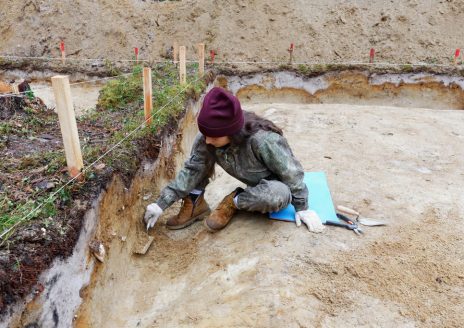
Understand how cultures evolve and investigate the past using clues our ancestors left behind with the Archeology Merit Badge. Scouts will learn about five archaeological sites in and outside the United States and give a short presentation about their findings to a Cub Scout pack, Scout troop, or peers in their classrooms.
shutterstock_497166907_reduced-for-web

Archaeology

Merit Badge Requirements

The previous version of the Merit Badge requirements can be found in Scoutbook

The requirements will be fed dynamically using the scout book integration
  • (a) For EACH site you research, point it out on a map and explain how it became known to archaeologists. Describe some of the information about the past that has been found at each site. Explain how the information gained from the study of these sites answers questions that archaeologists are asking and how the information may be important to modern people. Compare the relative ages of the sites you research.
  • (b) Choose ONE of the sites you picked and give a short presentation about your findings to a Cub Scout pack, your Scout troop, your school class, or another group.

5. Do the following:

6. Do the following:

7. Do ONE of the following and discuss your findings with your counselor:

10. Do ONE of the following:
Resource: Volunteering in Archaeology (video)
  • (a) With your parent or guardian's and counselor's permission, assist a qualified archaeologist for at least eight hours with a project being worked on. Projects may include surveying, site monitoring, site stabilization, excavation, laboratory analysis, use of digital archaeological technology, or public outreach. Describe your involvement in the project, what you learned about archaeology, and the steps of archaeological inquiry.

    Note: Visiting an archaeological site will require advance planning. An archaeological site during study can be a dangerous place. While there, you will need to closely follow the archaeologist's directions and comply with all the safety procedures. Be aware of the changing conditions at the site.
  • (b) With your counselor's approval, take part in a simulated archaeological project designed by a qualified archaeologist. The project must include the use of a simulated archaeological site including artifacts and features for the site. Using the steps of archaeological inquiry, analyze the artifacts and features and document the spatial relationships of the artifacts and features at the simulated site.

    Explain how the environment and time can affect the interpretation of an artifact and the overall archaeological site. Tell how you would share the results of your analysis with other researchers and the public.

    Note: To find out how to make a simulated archaeological site, talk with a professional archaeologist, trained avocational archaeologist, museum school instructor, science teacher, advisor from a local archaeology society, or other qualified instructor.

11. Under the supervision of a qualified archaeologist or instructor, do ONE of the following:
  • (a) Help prepare an archaeological exhibit for display in a museum, visitor center, school, or other public area.
  • (b) Use the methods of experimental archaeology to re-create an item or to practice a skill from the past. Write a brief report explaining the experiment and its results.

1. Tell what archaeology is and explain to your counselor how it differs or relates to other fields of study such as anthropology, geology, paleontology, and history. Explain how archaeology is different than artifact collecting or treasure hunting.
Resources: Archaeology: Digging Into the Past (video)
Archaeology vs Anthropology—What's the Real Difference? (video)
Know Your Scientists! Archaeology or Paleontology? (video)
8. Research a group of people who lived in your area more than 100 years ago. Find out about their ways of life, including housing, clothing, arts and crafts, tools, trade and markets, rituals and religions, and diets, and their relationships with other groups of people in the area. Describe what you would expect to find at an archaeological site where these people lived. Explain how these people influenced your current community.
9. Explore careers related to this merit badge. Research one career to learn about the training and education needed, costs, job prospects, salary, job duties, and career advancement. Your research methods may include—with your parent or guardian's permission—an internet or library search, an interview with a professional in the field, or a visit to a location where people in this career work. Discuss with your counselor both your findings and what about this profession might make it an interesting career.
Resources: Jobs Breakdown in Archaeology (video)
How to Become an Archaeologist (video)
How I Became an Archaeologist (video)
How To Become An Underwater Archaeologist (video)
Anthropologists and Archeologists Occupational Outlook (website)
2. Describe the following steps of the archaeological process: site location, development of background research and a research design, site survey and fieldwork, artifact identification and examination, interpretation, preservation, and information sharing.
Resources: Archaeologist Explains How We Know Where To Dig (video)
Archaeology Project Step 1: Research Design (video)
Archeological Surveys (video)
The Excavation Process: How We Excavate (video)
Archaeological Artifact Processing (video)
Archaeology Project Step 5: Interpretation (video)
How Do Modern Archaeologists Communicate Discoveries to the Public in the Digital Age? (website)
3. Describe at least two ways in which archaeologists determine the age of sites, structures, or artifacts. Explain what absolute dating and relative dating are.
Resources: What Is the Stratigraphic Record of a Site? (video)
How Does Radiocarbon Dating Work? (video)
Relative vs Absolute Dating (video)
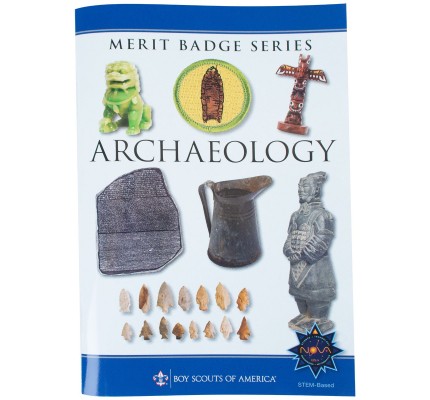
NOTE: The official merit badge pamphlets are now free and downloadable HERE or can be purchased at the Scout Shop.
fondo blanco liso
archaeology_MB_pamphlet
divider-graphic

Get the Archaeology Merit Badge Pamphlet

Merit Badge Pamphlets are now free and publicly available. Note: Always check stg.scouting.org/skills/merit-badges/all/ for the latest requirements.

Discover more about

"Archaeology"

logo-onscouting-2
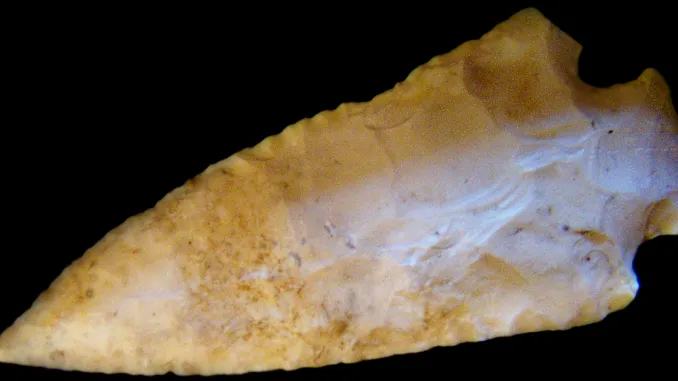
Before Camp Arrowhead became a favorite spot for Scouts to have summertime adventures, Native Americans hunted the land in southwest Missouri for at least 8,000 years. Scouts don’t even have to take the Archaeology merit badge to see evidence of this history. The camp, which was founded in 1924, has an expansive display of Native American arrowheads, knives, spearheads and tools – all of which have been discovered on the nearly 600-acre property. It’s hard to quantify how many artifacts have been found at camp over the years, but the camp’s display showcases more than 300 tools. “I was reading about the history of the camp and the very first story I read was of Scouts camping in 1926,” says John Feick, Ozark Trails Council’s Scout executive. “When a Scout cleared leaves away to set up a tent, he found a ‘perfectly formed arrowhead.’” Taking the Archaeology merit badge can help a Scout develop an eye for what to look for. That technique is what Troop 999 of Plano, Texas, learned this summer.

In Partnership with

View Related Merit Badges

Chat Icon
Scoutly Toggle Size Close Chat
New Digital Resource Guides Available

Digital resource guides for Fingerprinting & Cycling are now available. Check them out today!